excess 13

DESCRIPTION

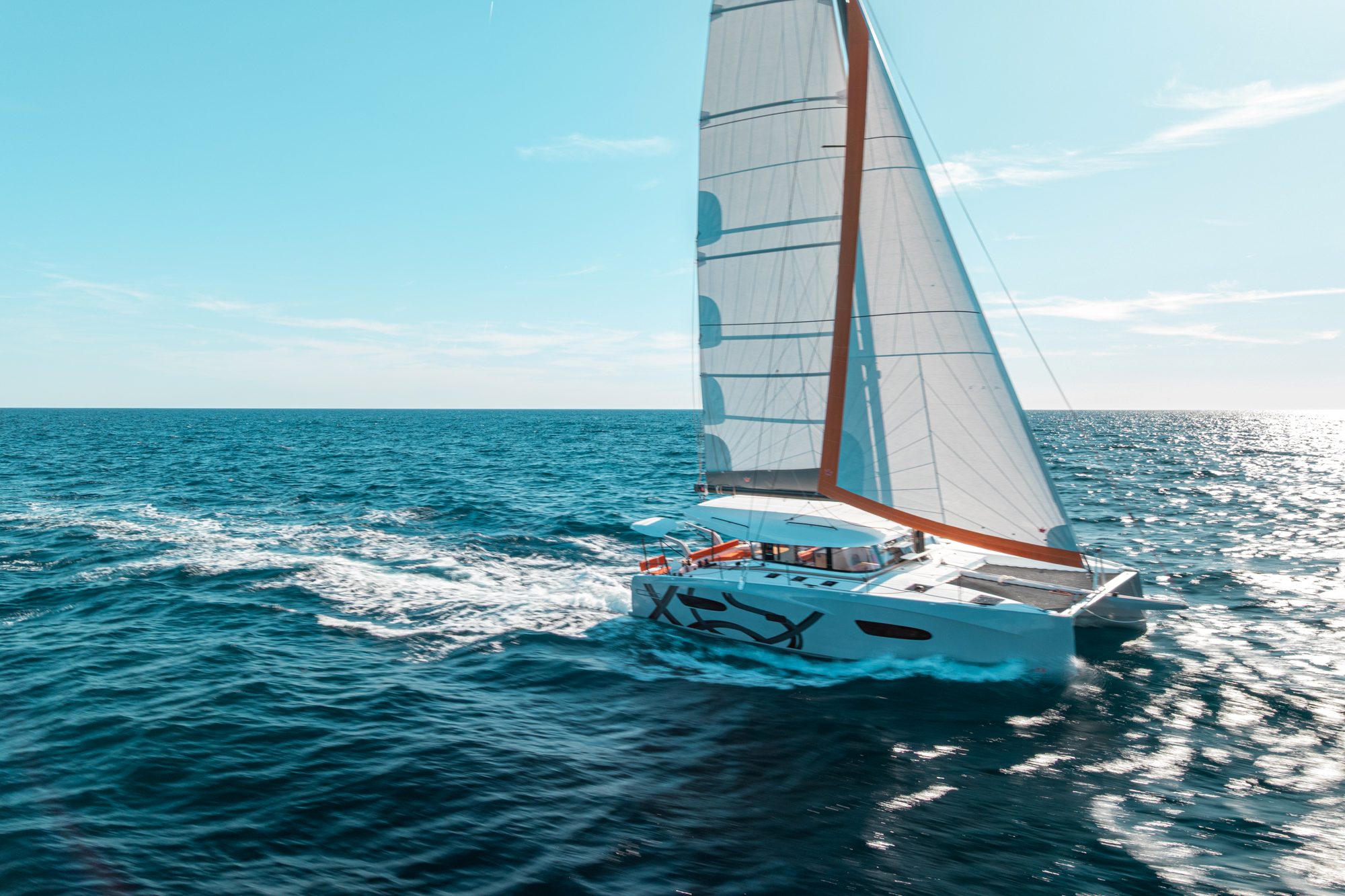
The Excess 13 is basically what happens when someone says, “I want a real sailor’s catamaran… but I also want more space, less diesel burn, and a rock‑solid platform for living aboard.” On paper it’s a 43‑foot performance cruising cat, but the intelligent layout and design makes it so much more. In practice, it’s Excess’ “sweet spot” boat: drawn by Marc Lombard Yacht Design Group with interiors by Piaton Yacht Design and built around the motto “Designed for sailing, crafted for living” and a very deliberate “less is more” philosophy.

Crusader Yacht Sales is proud to be your Excess Catamaran dealer for Maryland. With inventory and our main office right in the heart of Annapolis, combined with our ability to take your current boat in on trade, your new Excess ownership experience is within grasp. Contact us today at (410) 269-0939 for more detailed information and pricing on the new Excess 13.

What can you expect from the Excess 13?

1.) For the sailor first: how the Excess 13 actually sails

If you love the feel of a monohull but want catamaran comfort, this is where the 13 gets interesting.

Asymmetrical hulls and light displacement

Excess Catamarans kept their now‑signature asymmetrical hulls and pushed them further: the hulls are finer below the waterline, with more volume carried higher up. What that does for you:

  • Less wetted surface → less drag: she slips along more easily, especially in light air, so you can sail instead of firing up the engines.
  • Good performance without skinny‑inside hulls: you still get decent interior volume because the beam is carried higher above the water.

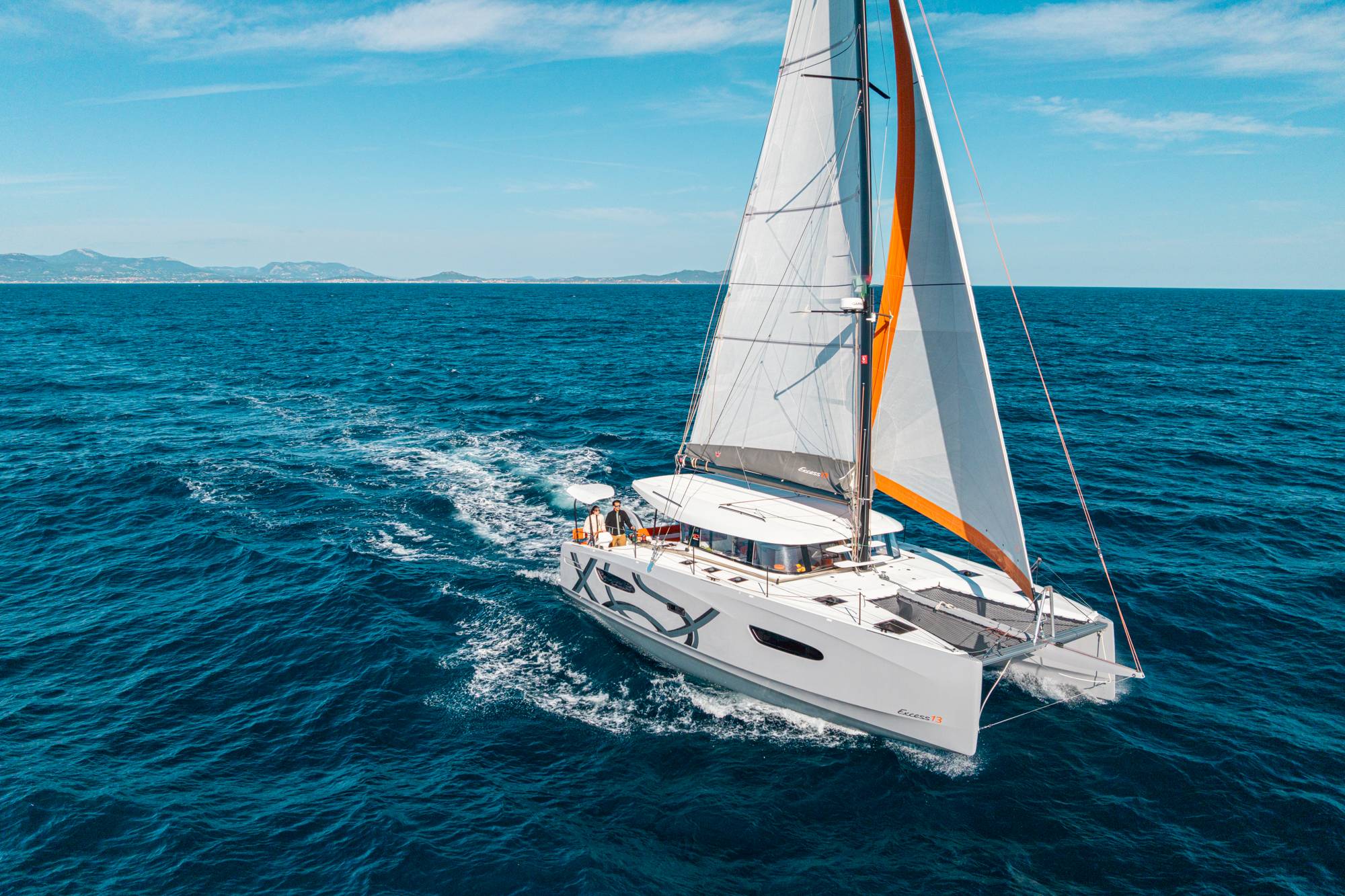
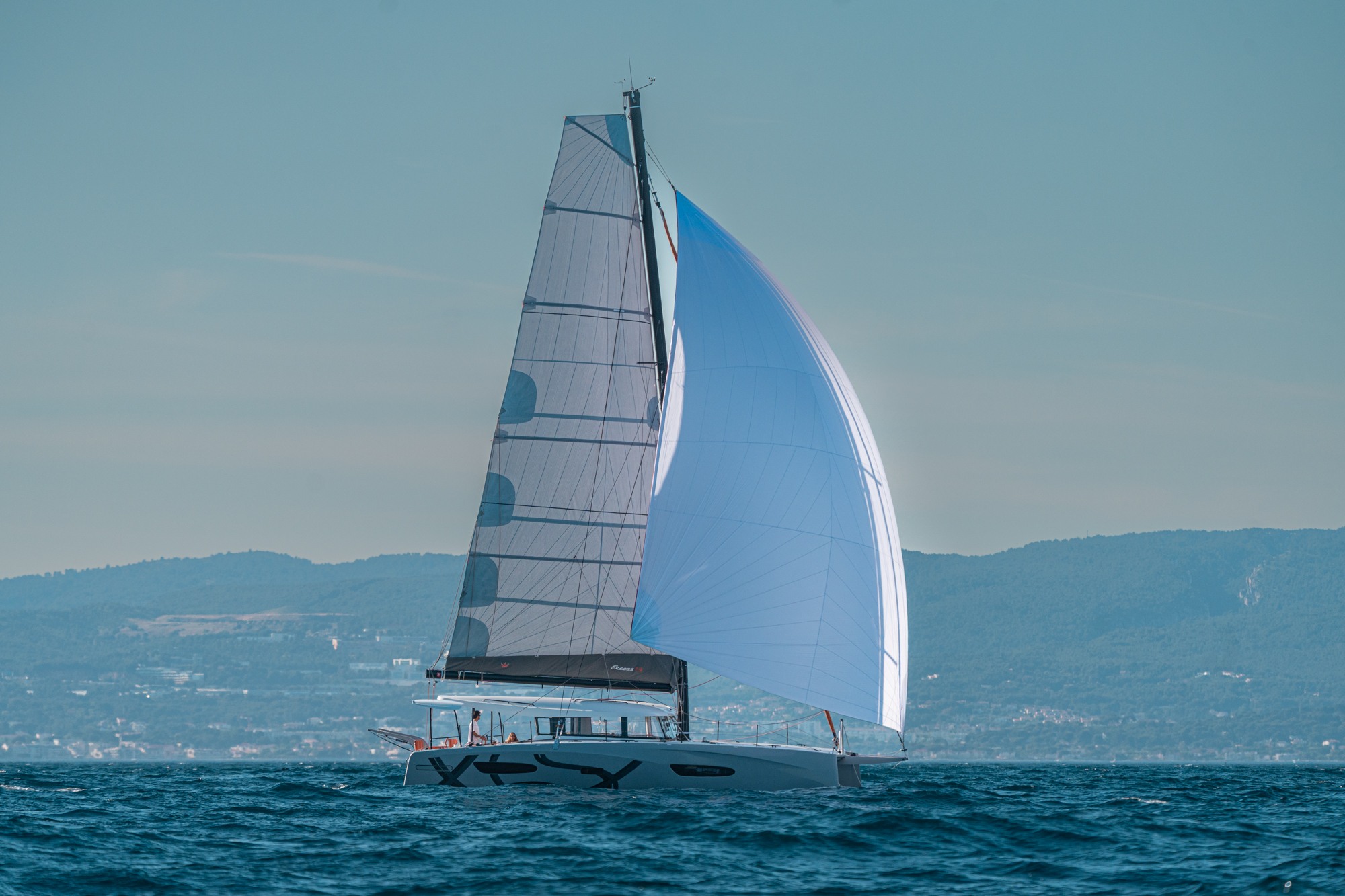
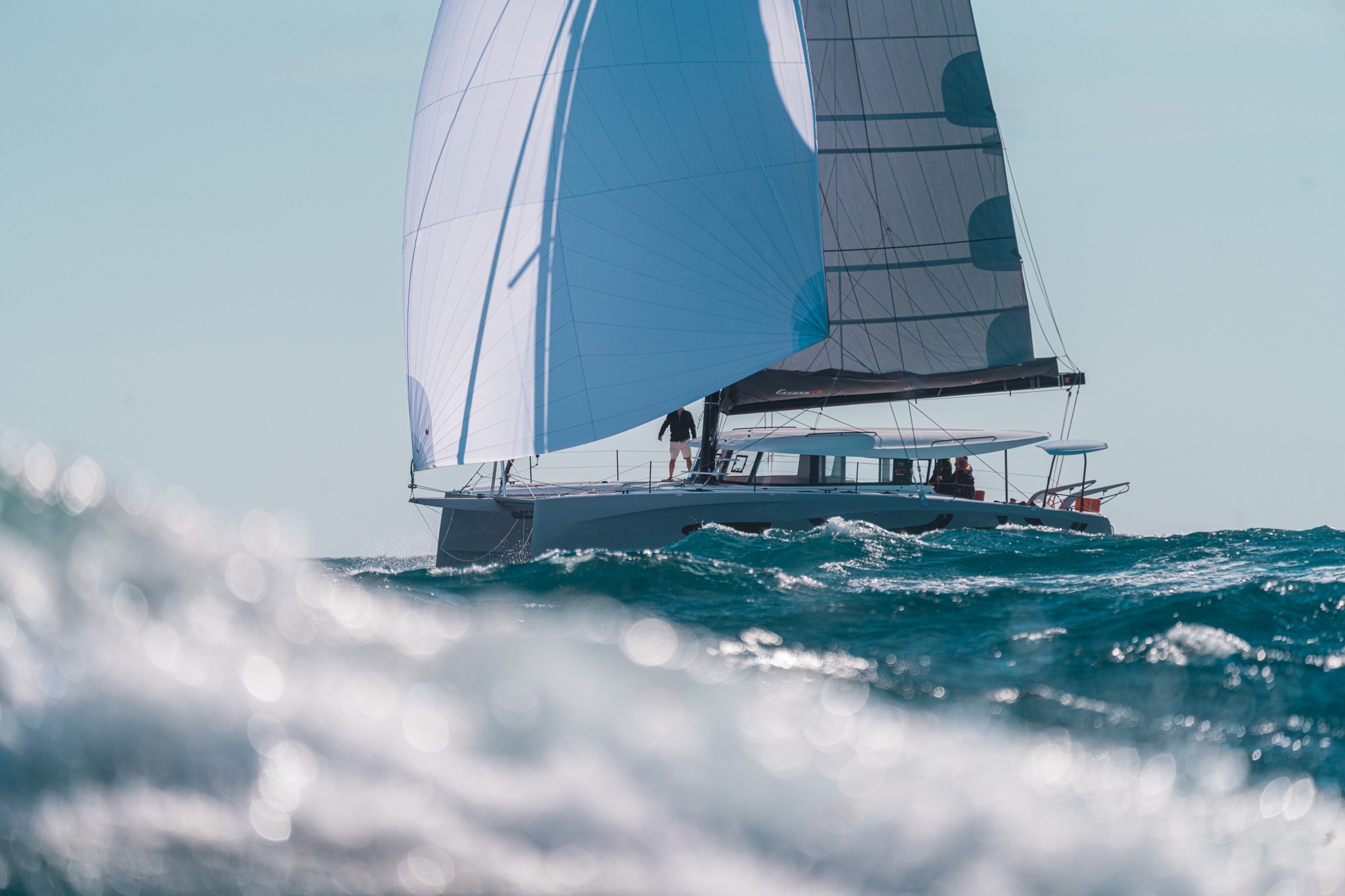
Lightship displacement is about 23,000 lbs. – much lighter than some comparable 43‑ish foot cruising cats, yet she carries more upwind sail area than competitive boats. That weight/sail‑area combo is what nudges her into the “fast cruiser” category rather than “floating condo”. With the standard rig you get about 370 square feet of upwind sail area; choose the Pulse Line package and that climbs to roughly 400-405 square feet, with a taller mast and more powerful square‑top main. Independent analysis pegs the SA/D ratio (especially in Pulse Line) above 25 – squarely in performance‑cruiser territory. In other words: in 10–12 knots of breeze you’re still properly sailing while many mainstream charter cats are already motoring.

Direct, hands‑on steering

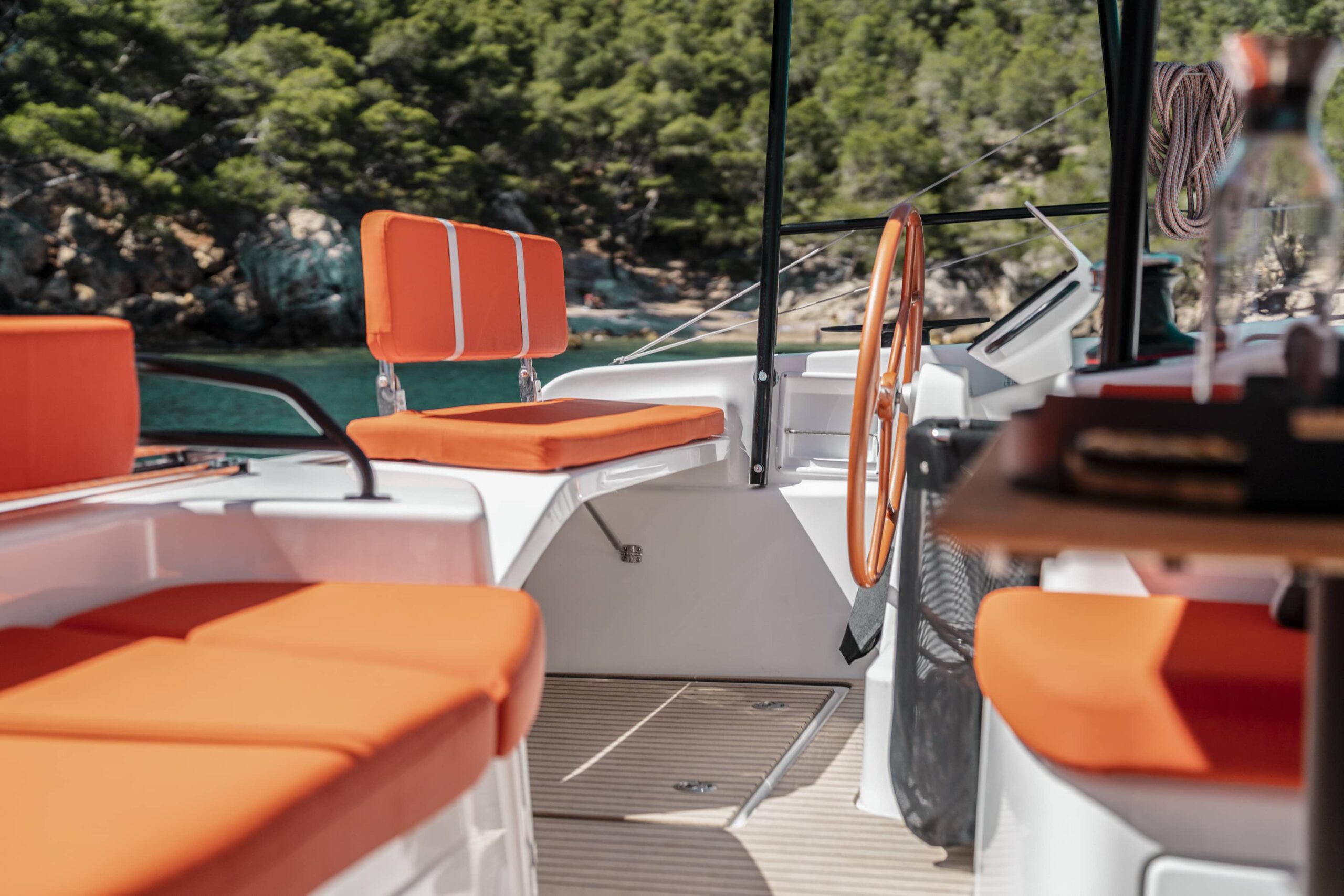
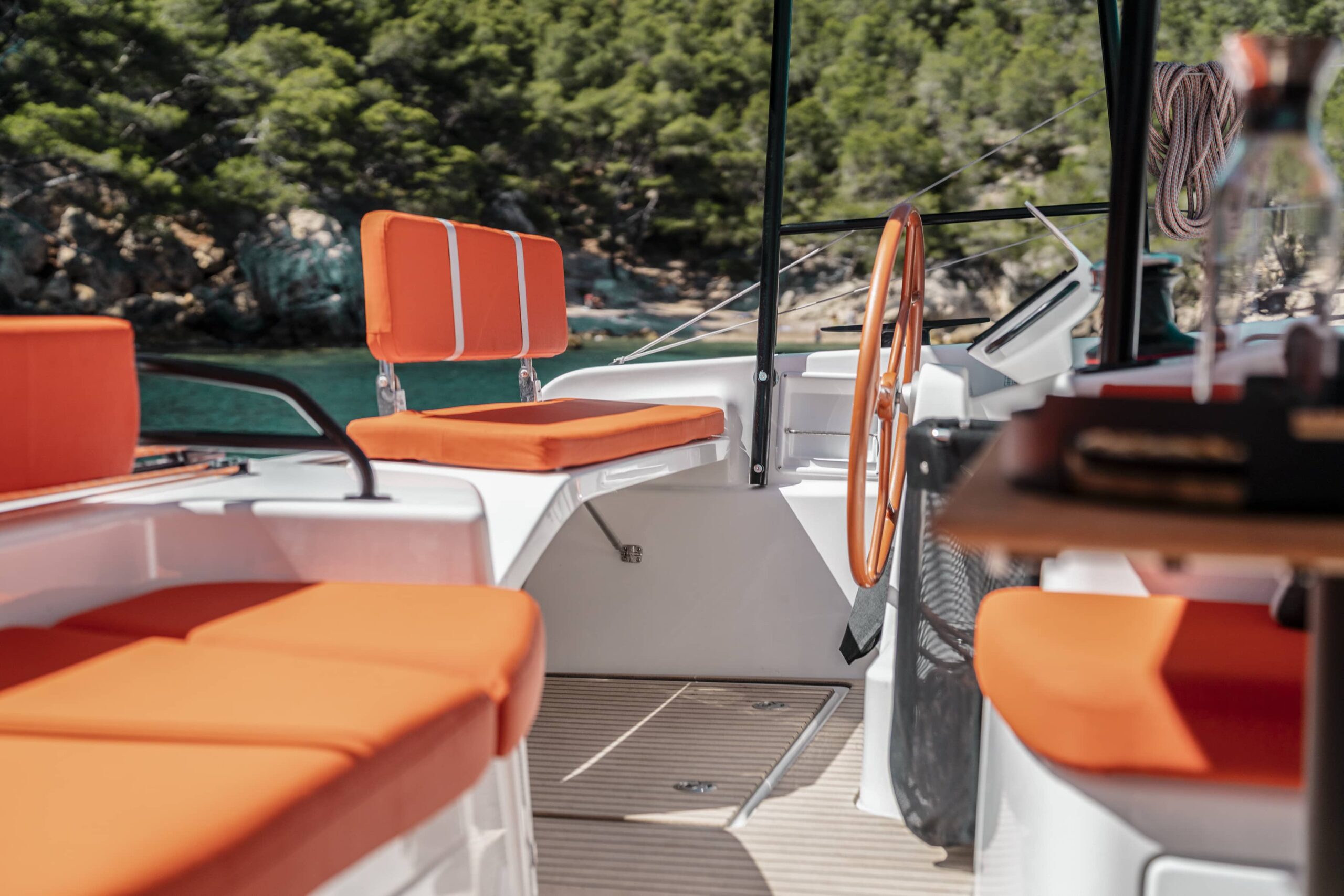
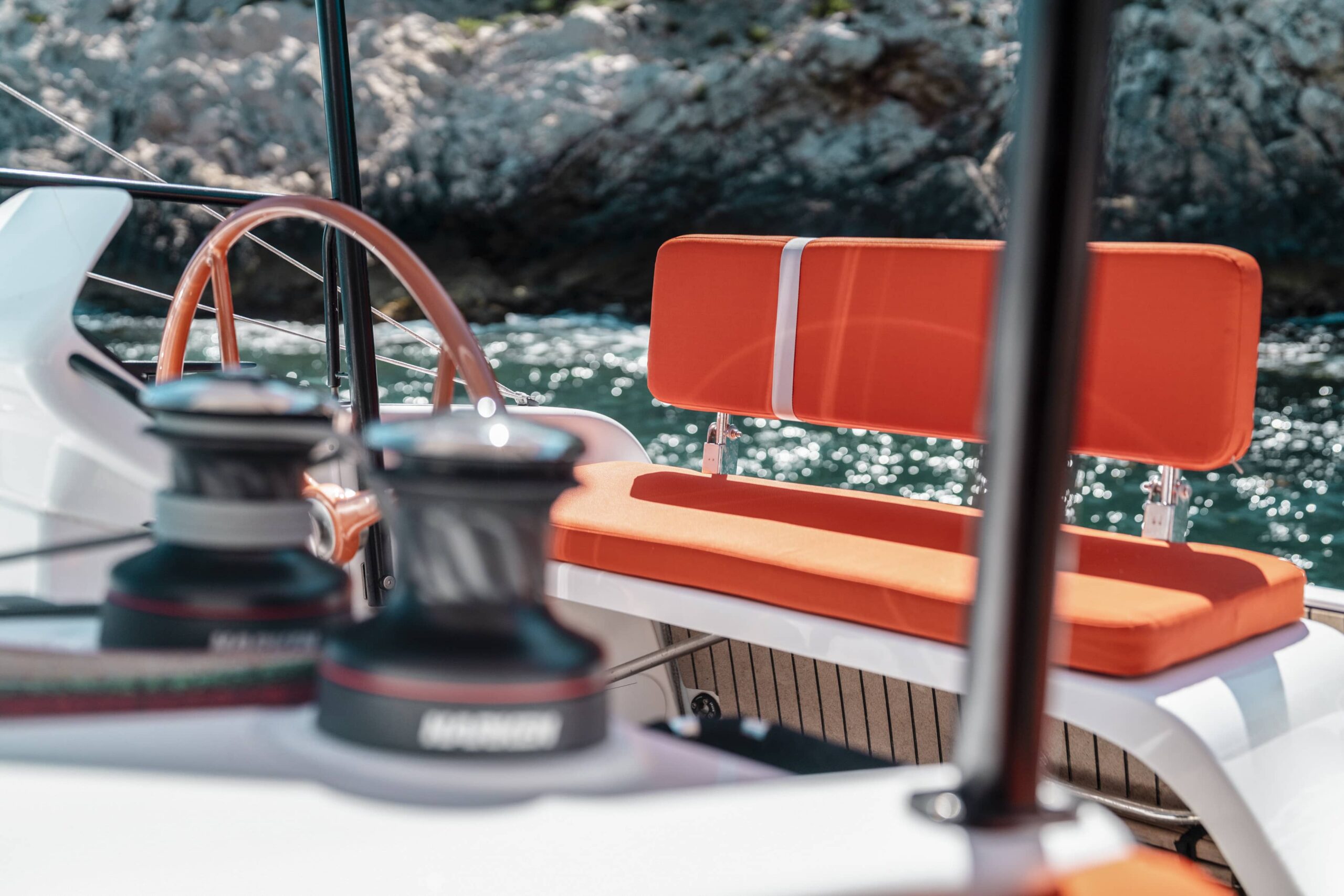
Unlike flybridge cats that park the helm on a roof, the Excess 13 keeps twin aft helms right back at the quarters. You’re close to the water, the transoms, and the mainsheet – which means you feel trim and boat speed immediately rather than steering from a “roof terrace.” Key helm features oriented at someone who actually enjoys sailing:

  • Dyneema steering cables for a more direct, “mechanical” feel instead of spongy long linkages.
  • Twin aft helm seats with 360° sightlines, so you can see luff telltales, leeward bow, and traffic without leaving the wheel.
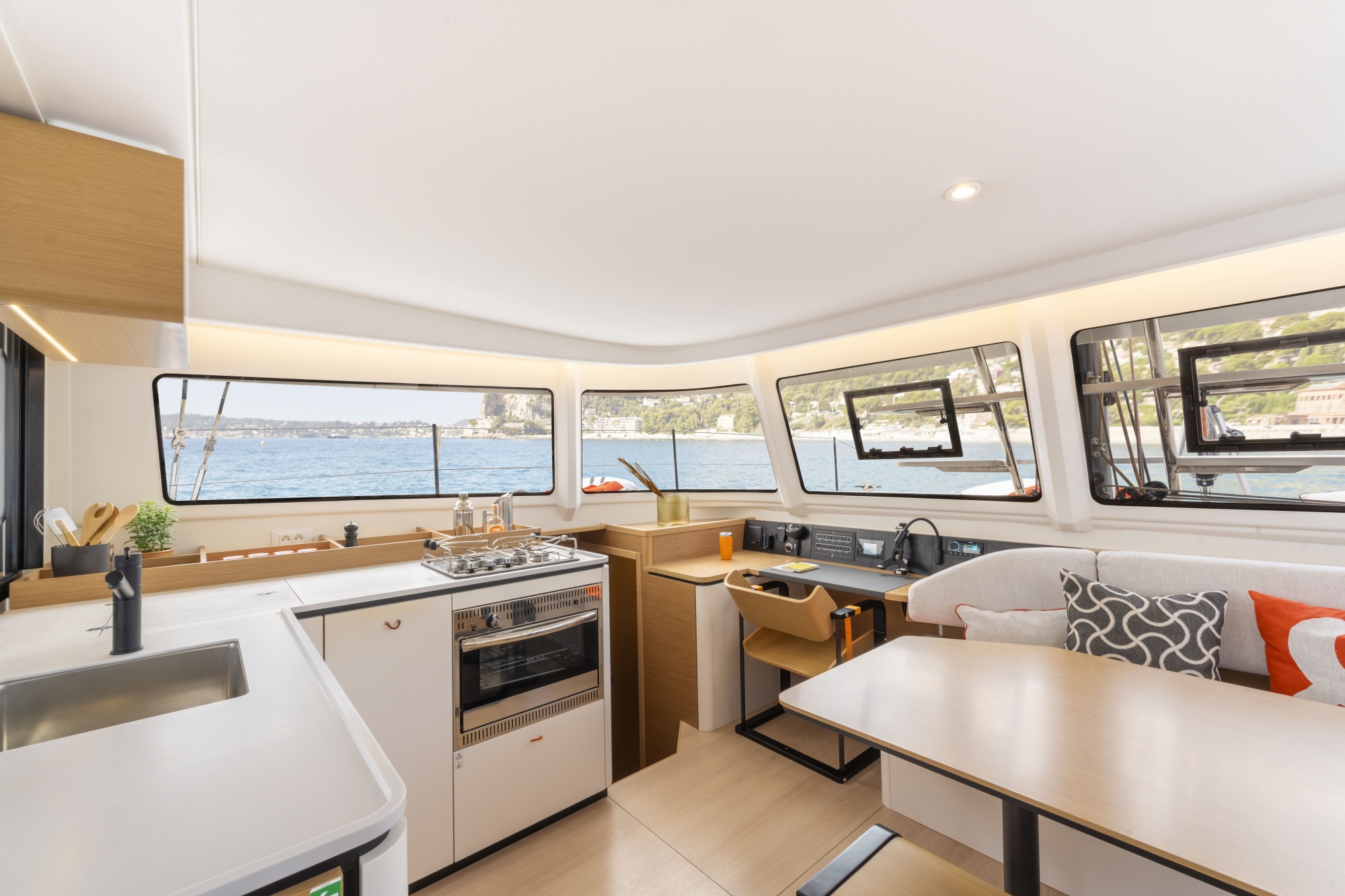
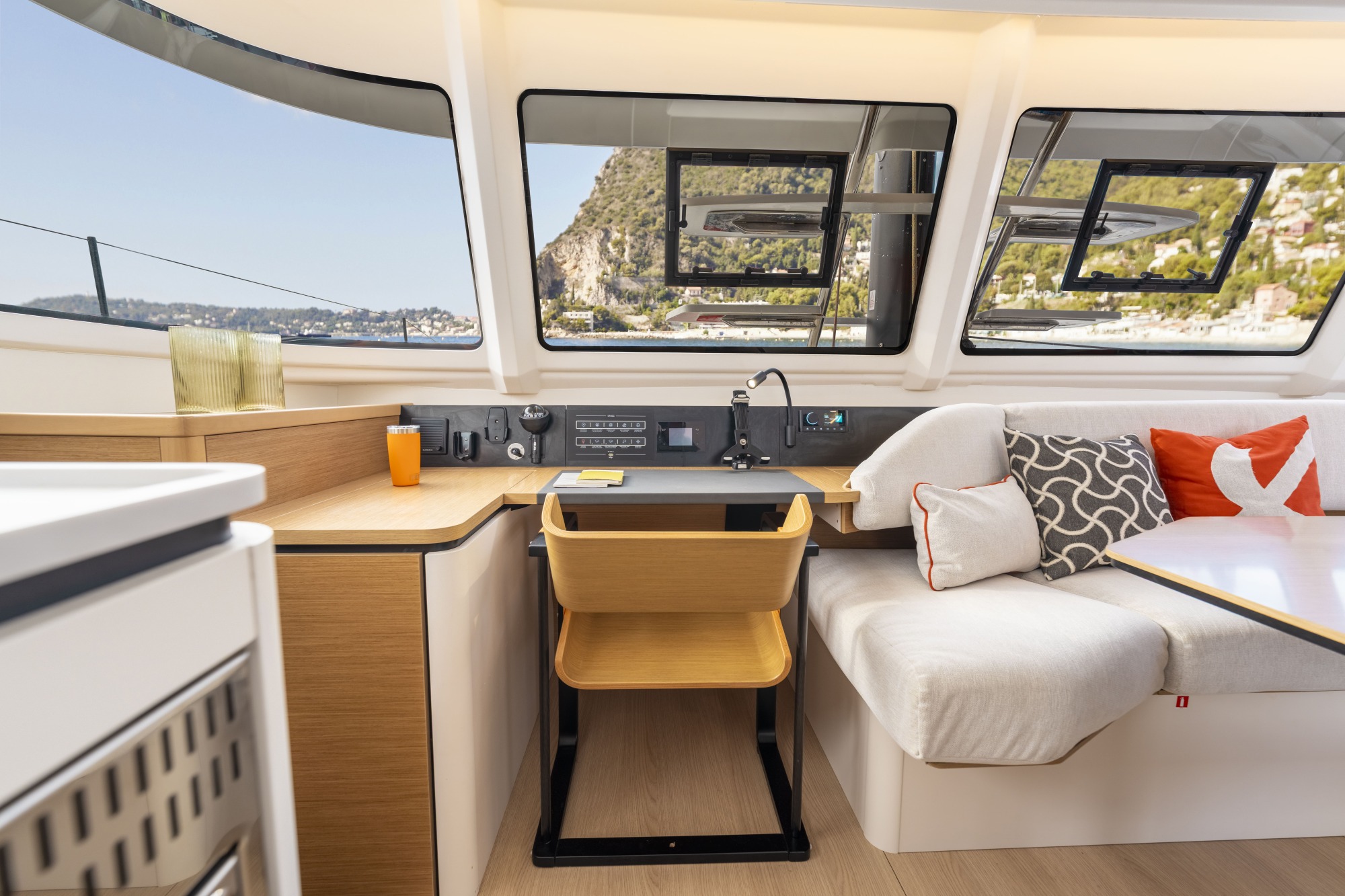
  • A forward‑facing chart table at the front of the saloon that keeps you visually connected to what the boat is doing, even when you’re inside.
  • Upgraded 3D genoa sheeting on the 13, controlled from the cockpit, so you can properly dial in the overlapping headsail without going forward to physically move cars.

Put simply: this is one of the few production cats of this size where you can nerd out on sail trim and still have the family hanging out comfortably in reach of the helm.

2.) Stability and comfort underway & at anchor

If nothing else, the design of the Excess 13 provides for a very stable platform so you and your guests enjoy your boating experience without much rocking or annoyances. With a 23′ 9″ beam on a 43′ hull, you’ve got the classic catamaran wide stance that dramatically reduces heel. Reaching or upwind, you’ll typically sail at 5–10° of heel instead of 20–30° on a monohull. That’s friendly for non‑sailors and for long passages.

The boat is CE Category A (Ocean) – so she’s designed and certified for open‑ocean conditions, not just coastal hops. Lighter displacement plus the fine forward hulls reduce “slamming” and hobby‑horsing compared with boxier production cats, because the bows don’t have to shove as much volume through chop.

At anchor, the big beam and twin hulls mean she’s inherently more stable than a similar‑length monohull. Add to that:

  • Low‑down weight in the bridgedeck (galley, saloon, tankage) rather than stacked high in a flybridge.
  • Fold‑down sugarscoops that become extra “outriggers” of people and gear when deployed – more mass spread wide, less twitchiness.

You’ll still pick your anchorages carefully in a big swell (cats always do), but day‑to‑day stability, especially for kids, guests, or work‑from‑boat life, is a major step up from a typical 40‑something monohull.

3.) Interior Space: Accommodations on the Excess 13

If you’re moving up from a monohull, the sheer volume of the Excess 13 is going to feel slightly surreal. The amount of space to move around, storage options, organized space for water toys, and just open room for relaxing are all in abundance on a catamaran design.

Cockpit & outdoor living

The cockpit is where you’ll feel it first:

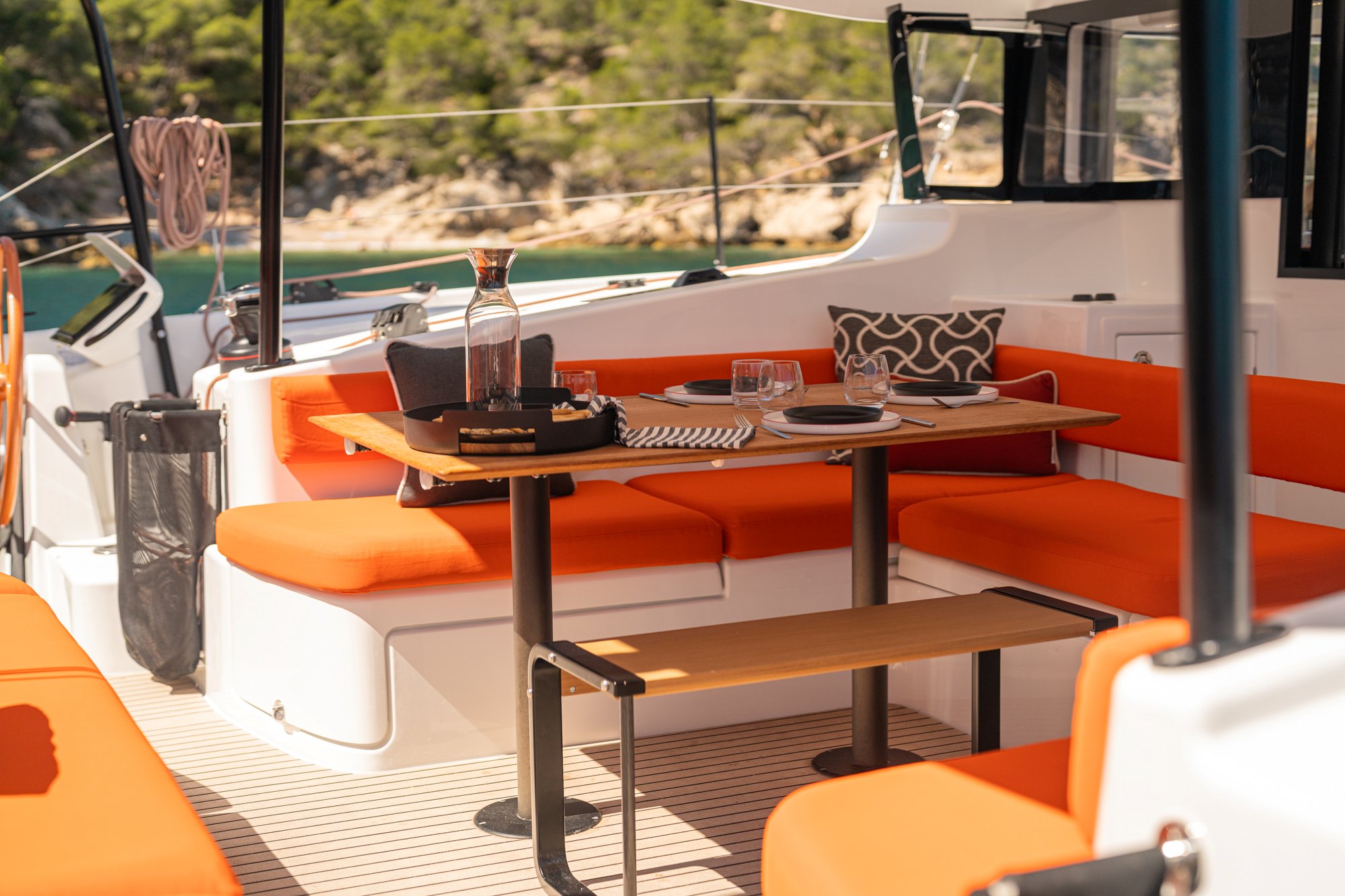
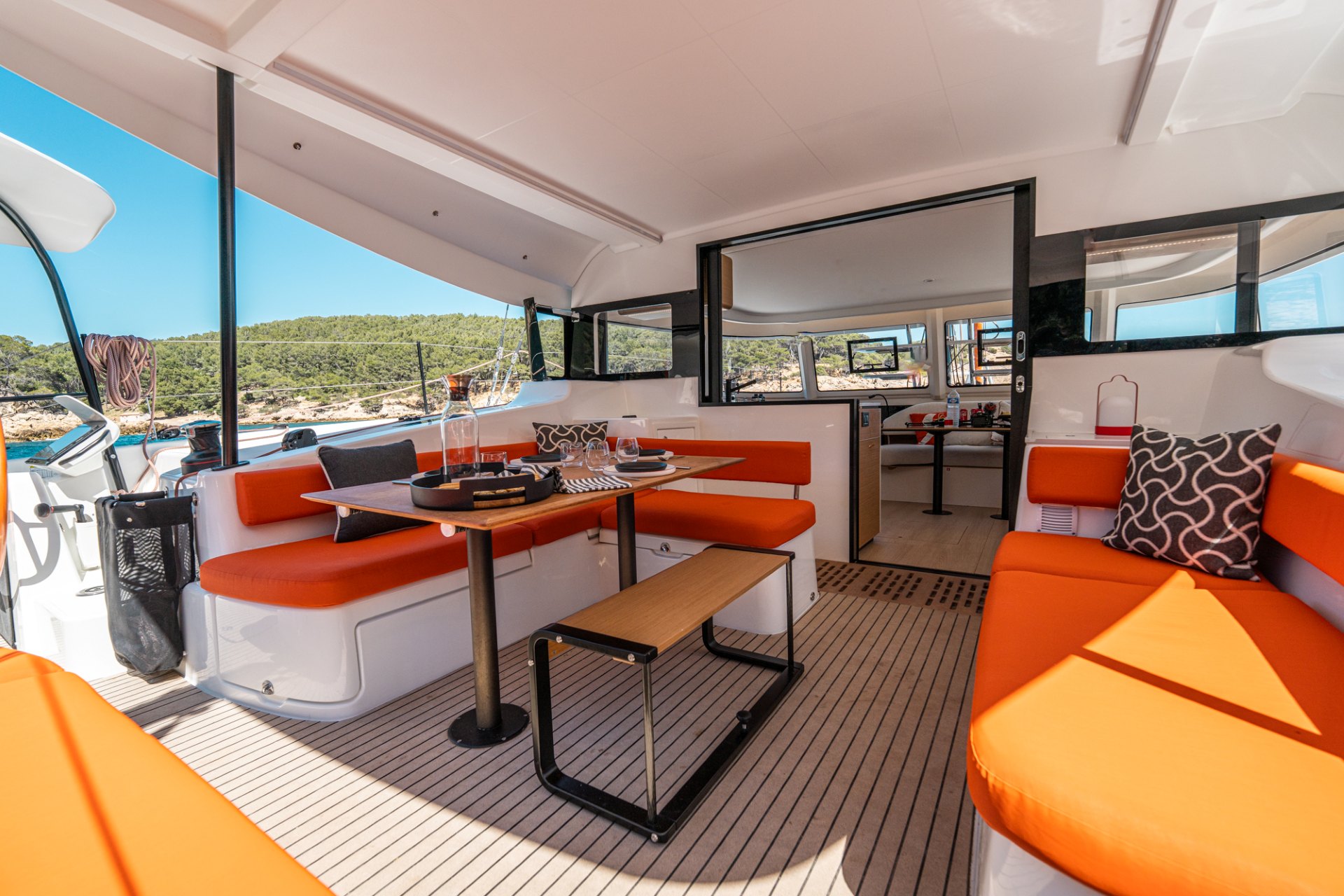
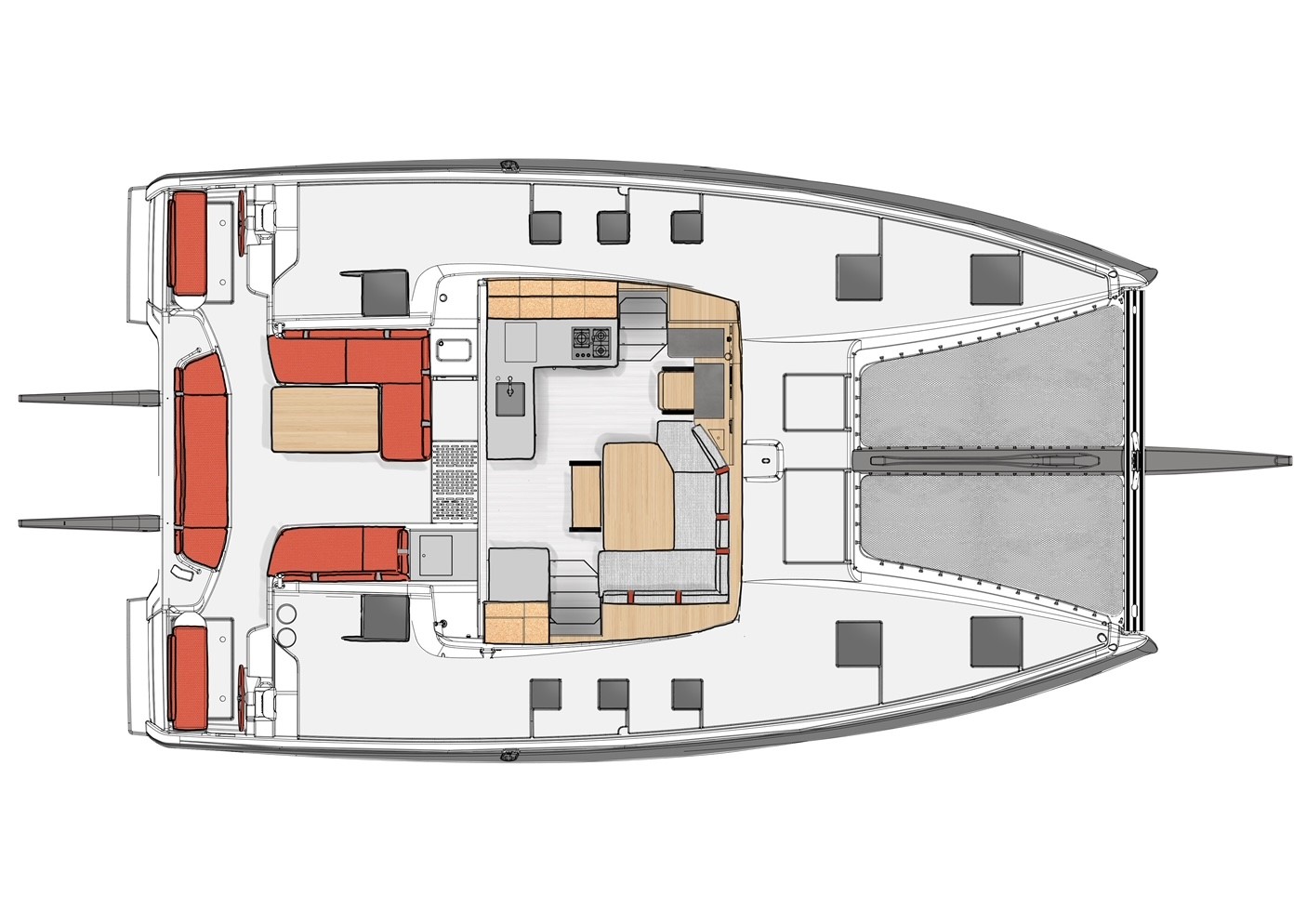
  • A full‑beam aft bench, L‑shaped dinette, and extra seating mean you can comfortably host 6–10 people without feeling crowded.
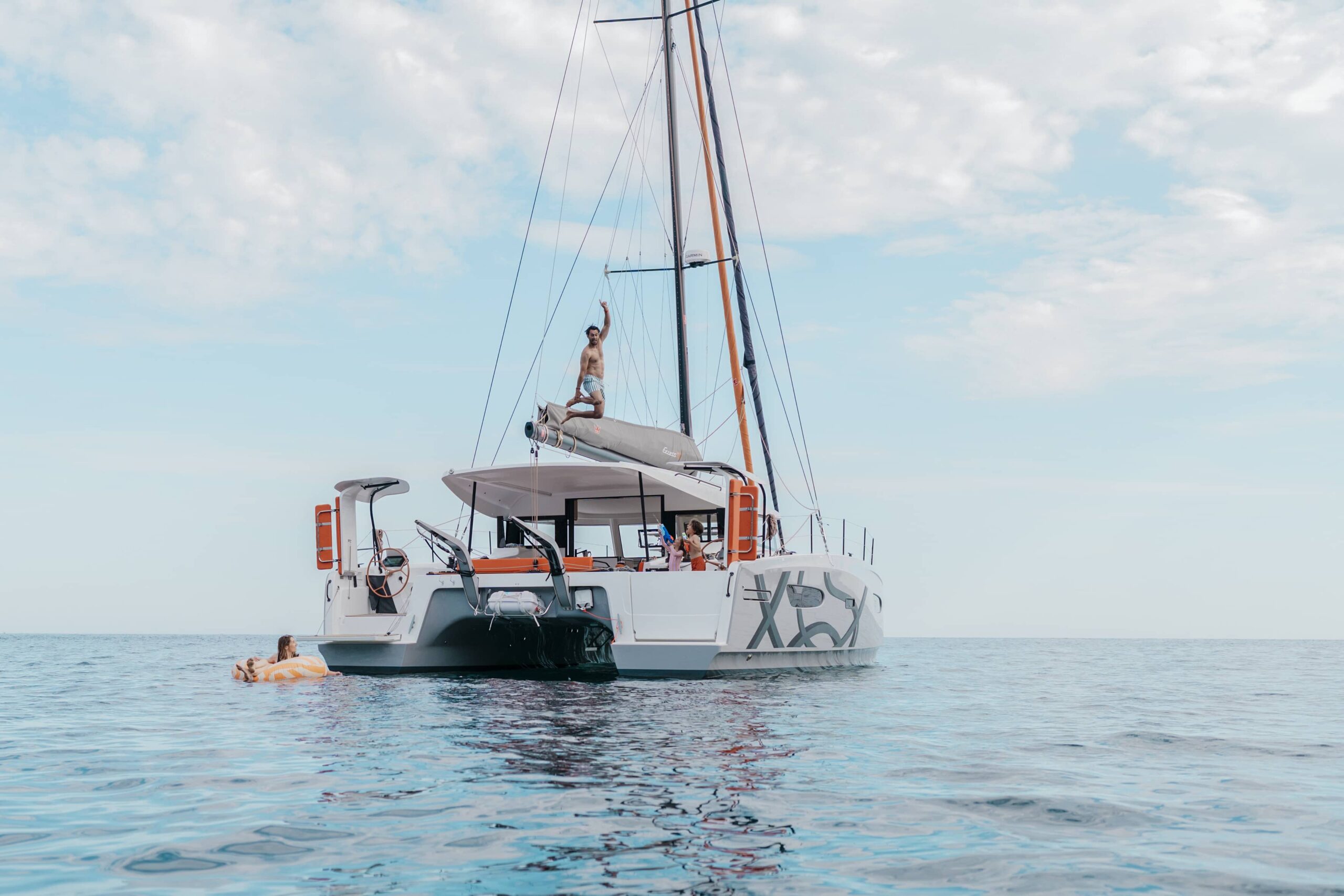
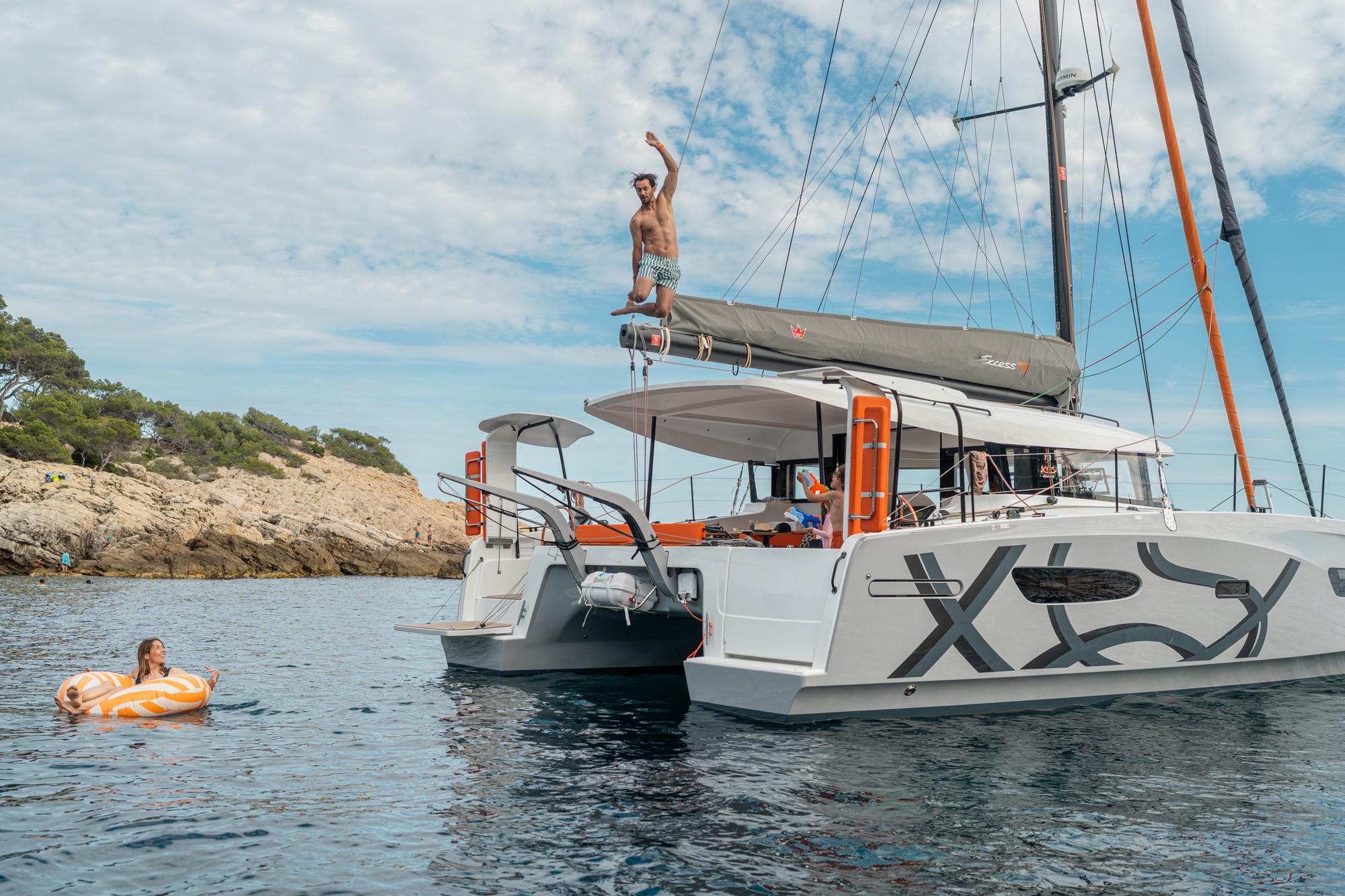
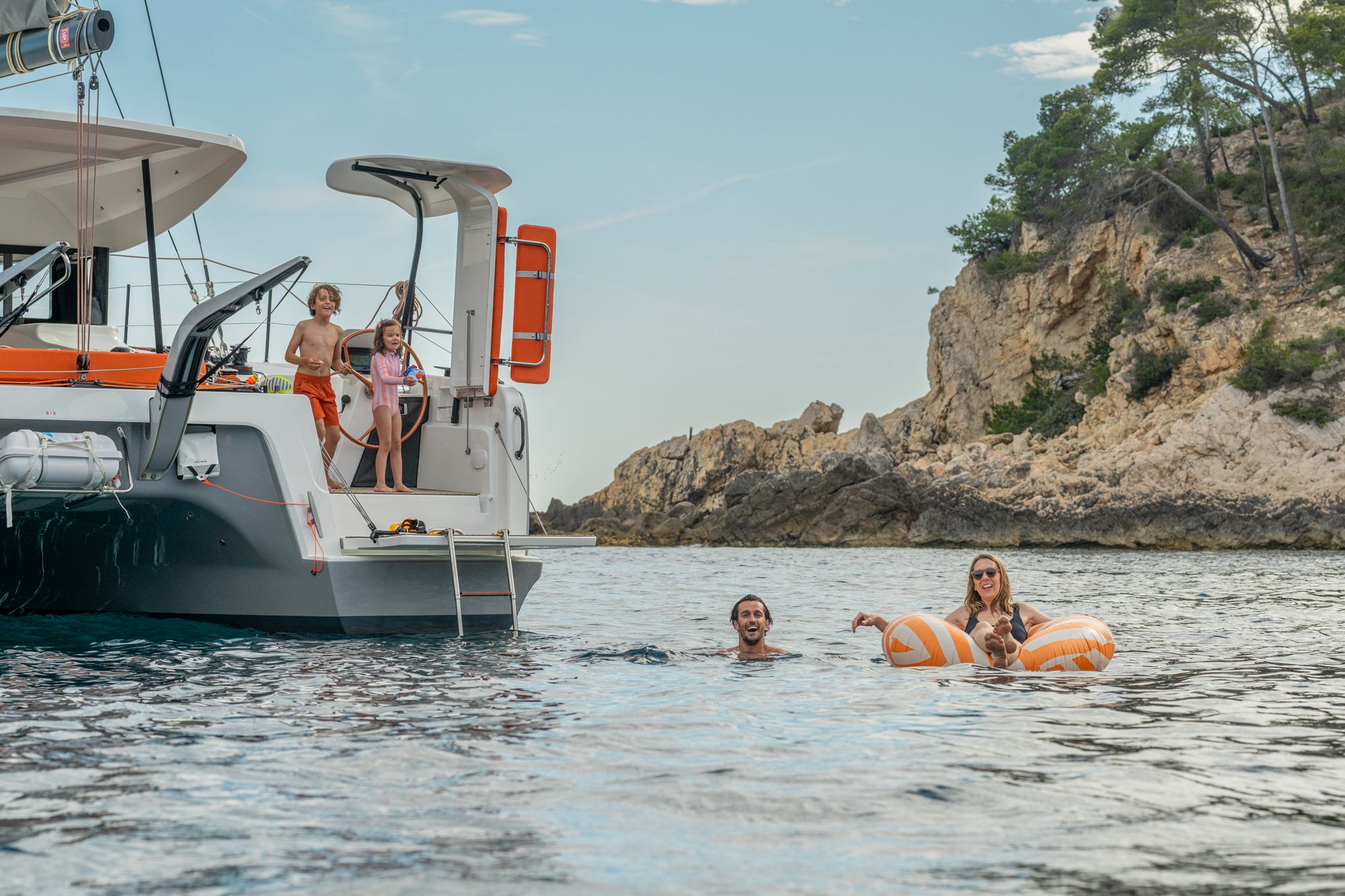
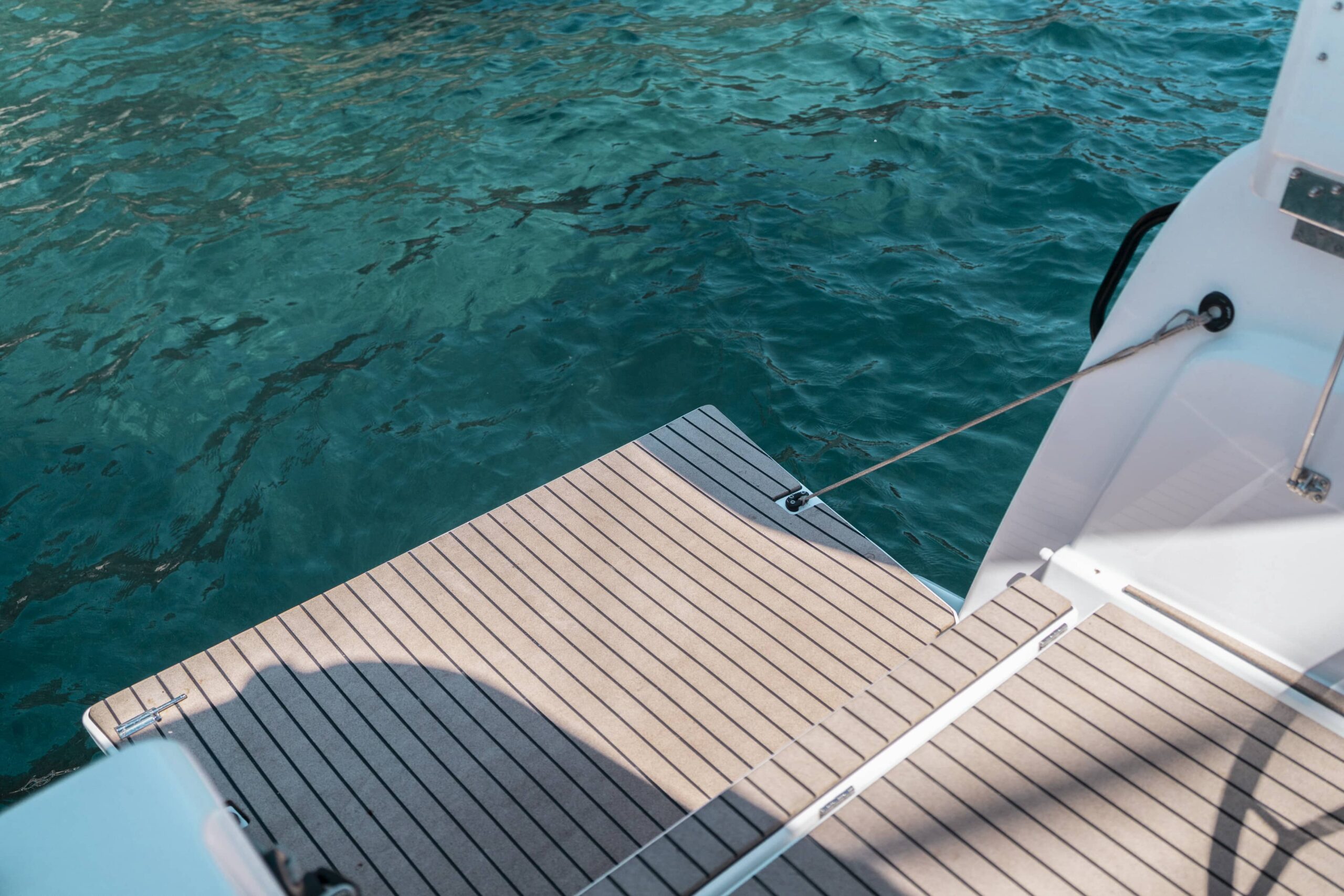
  • Those fold‑down transoms/sugarscoops turn the boat into a watersports platform at anchor – great for diving, SUPs, wingfoiling, or just easy dinghy boarding.
  • When they’re raised, they close off the cockpit nicely, which is reassuring if you’re sailing with kids or pets.

Forward, you’ve got the usual trampoline area plus wide side‑decks and large locker volumes for toys and gear. Excess has leaned into this “sea as your playground” brief – there’s dedicated exterior storage designed specifically for boards, wings, and dive gear.

Saloon: light and connected

Step inside and the first impression is airiness:

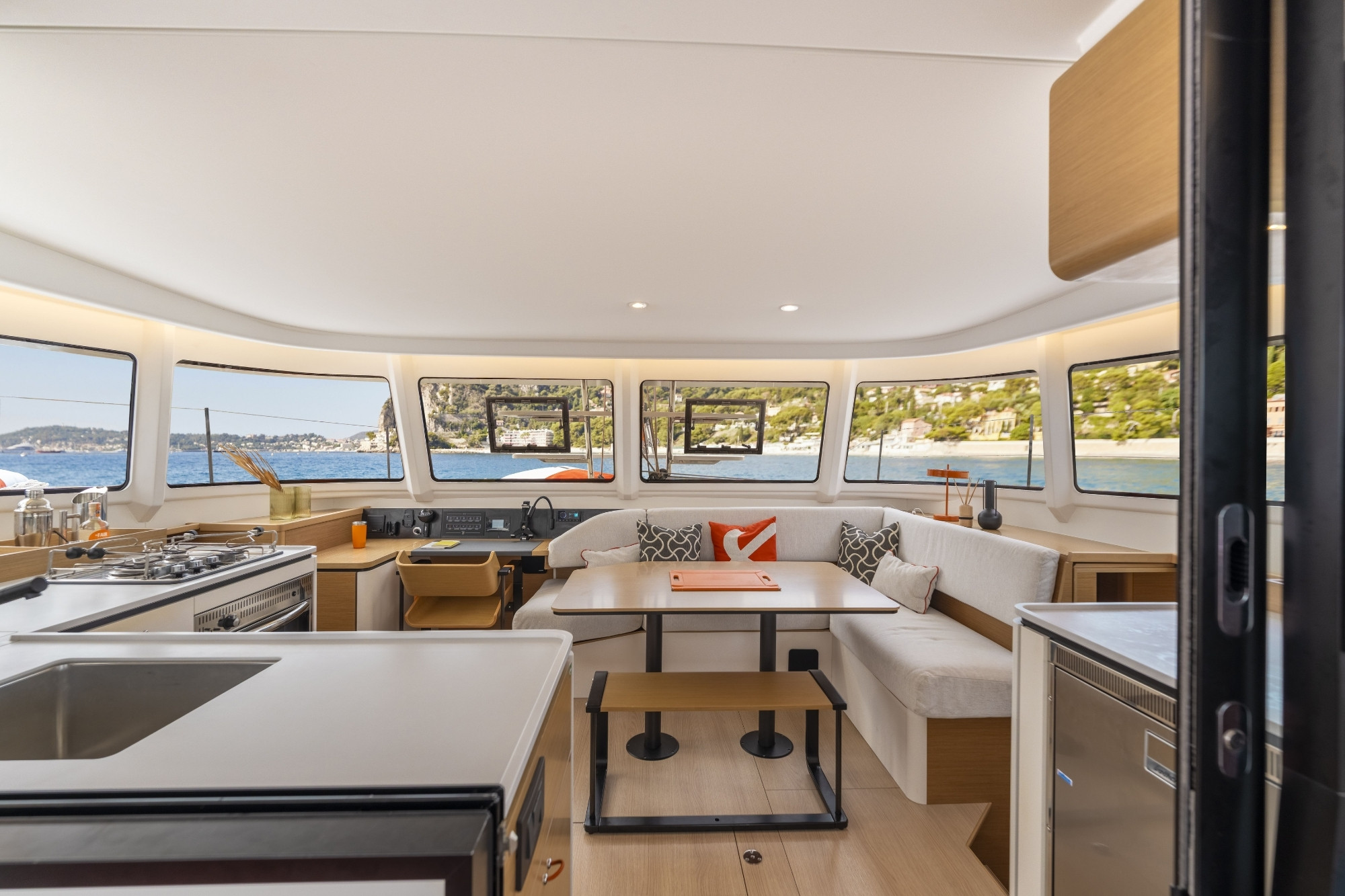
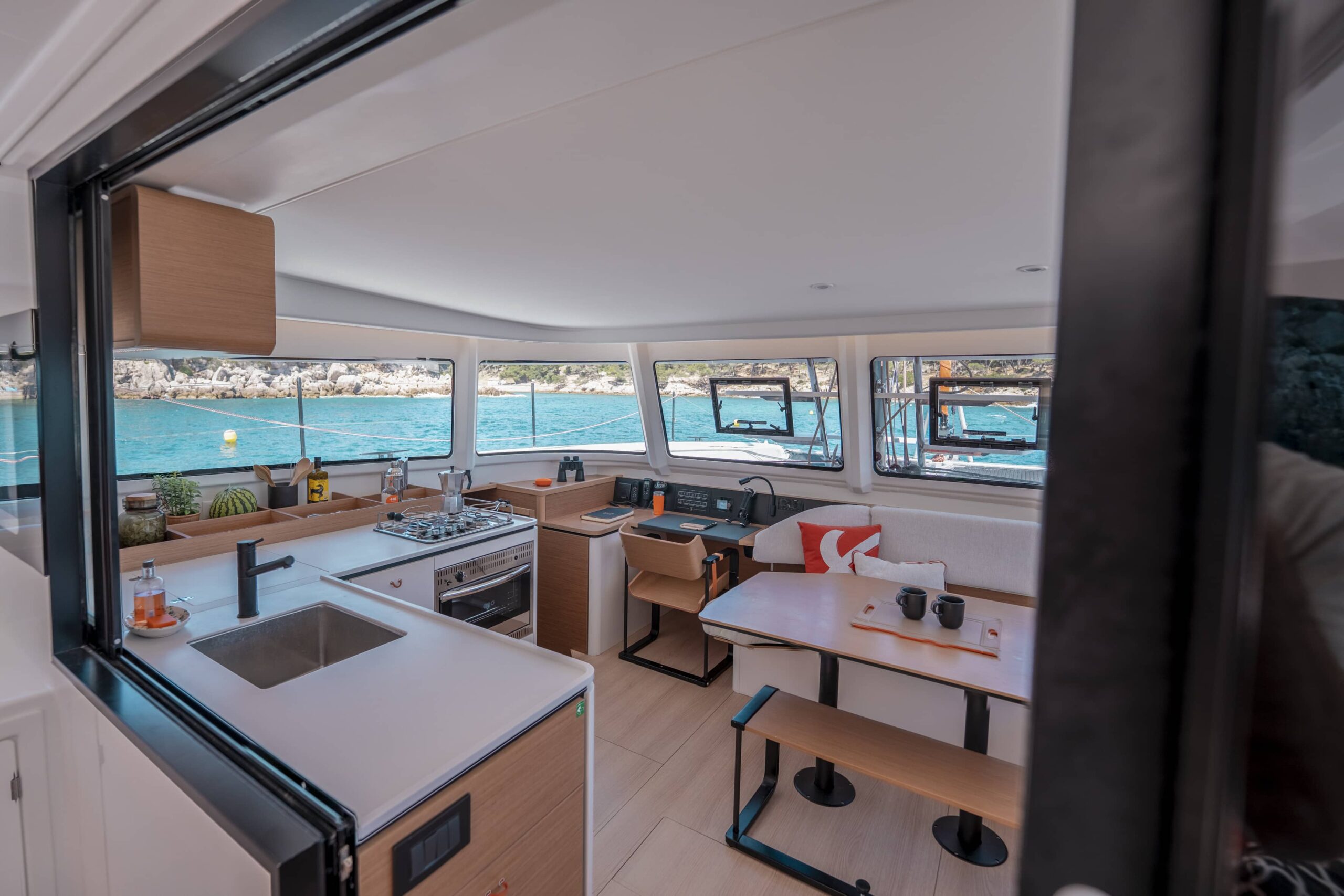
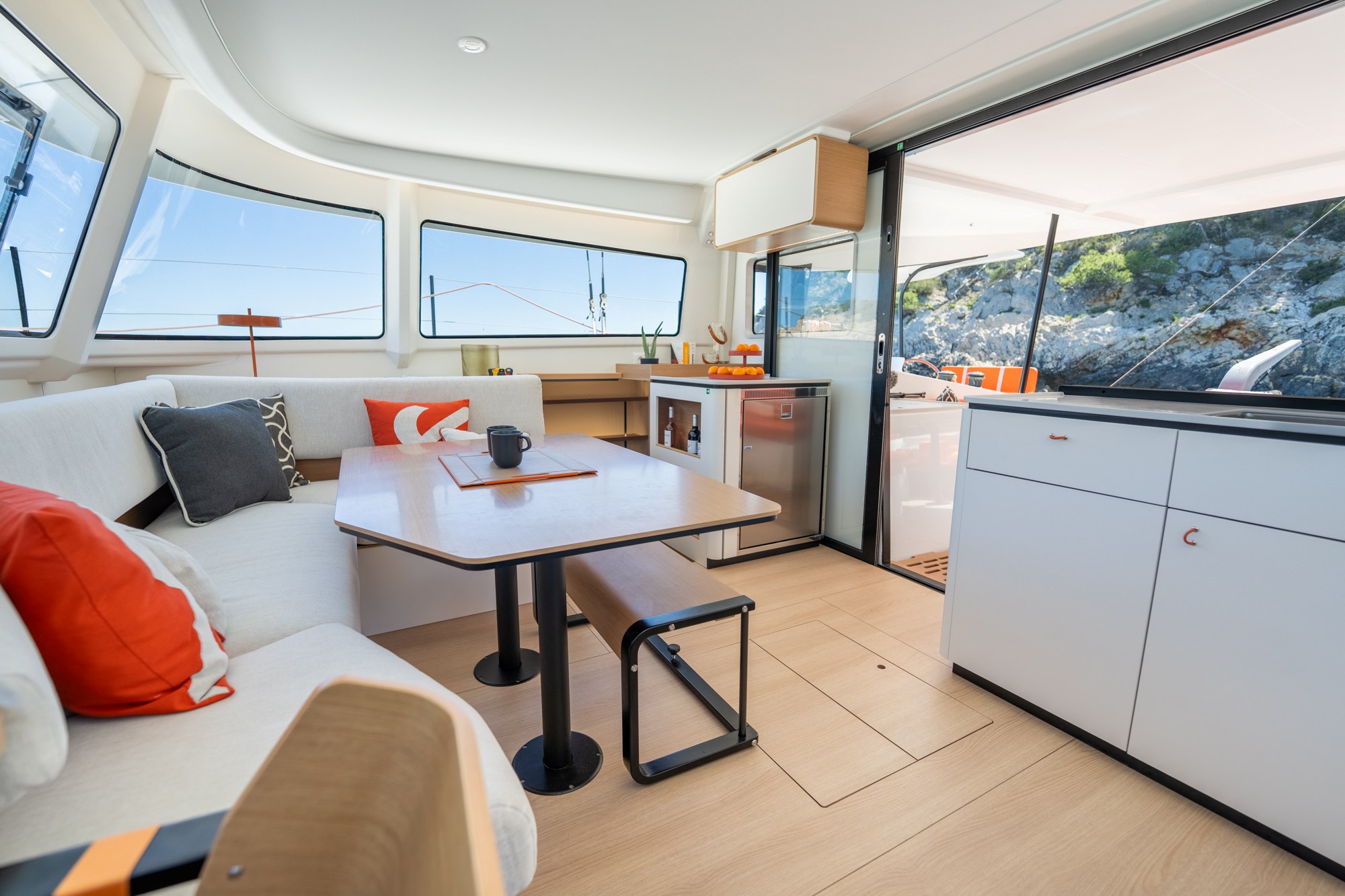
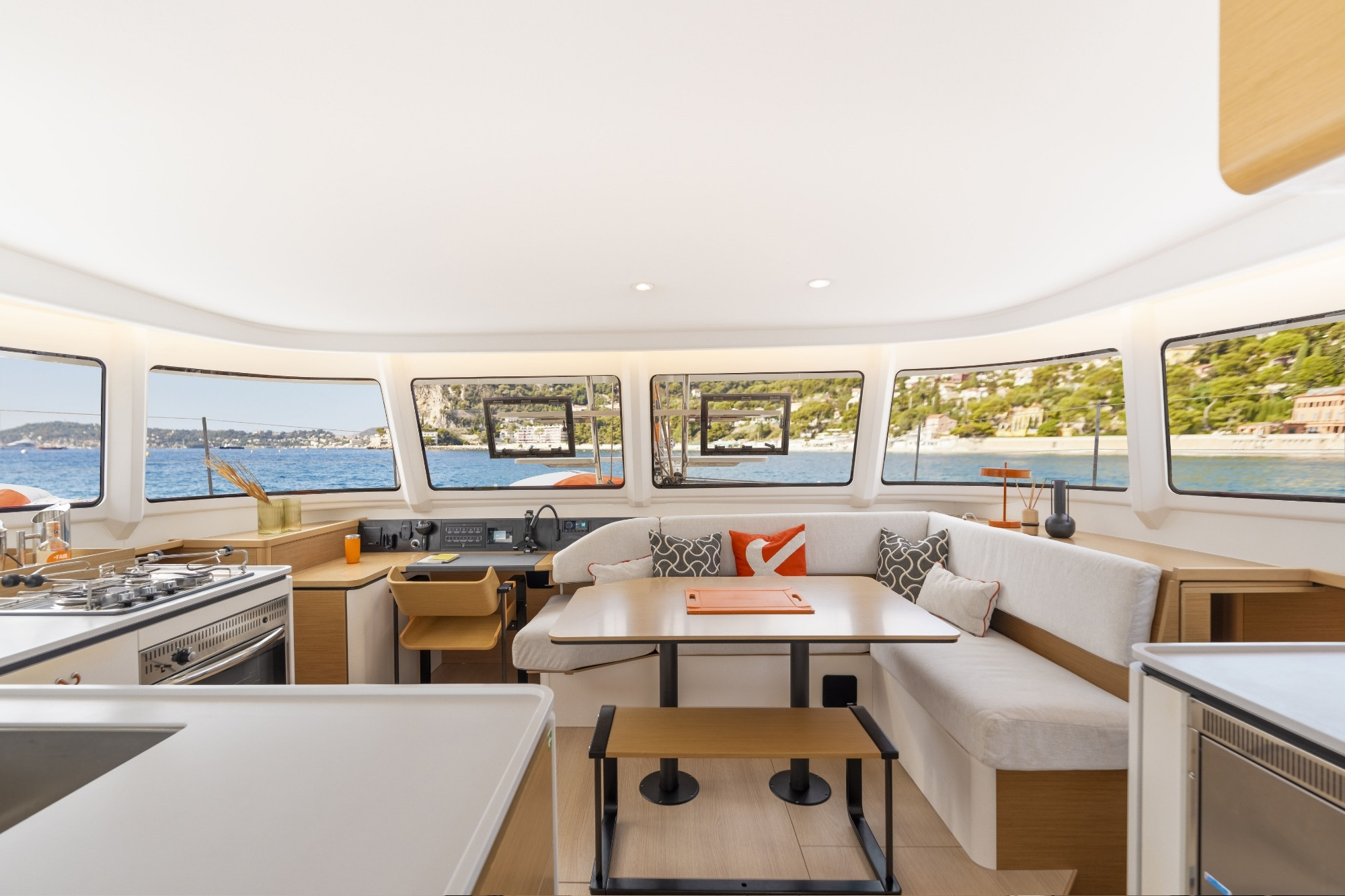
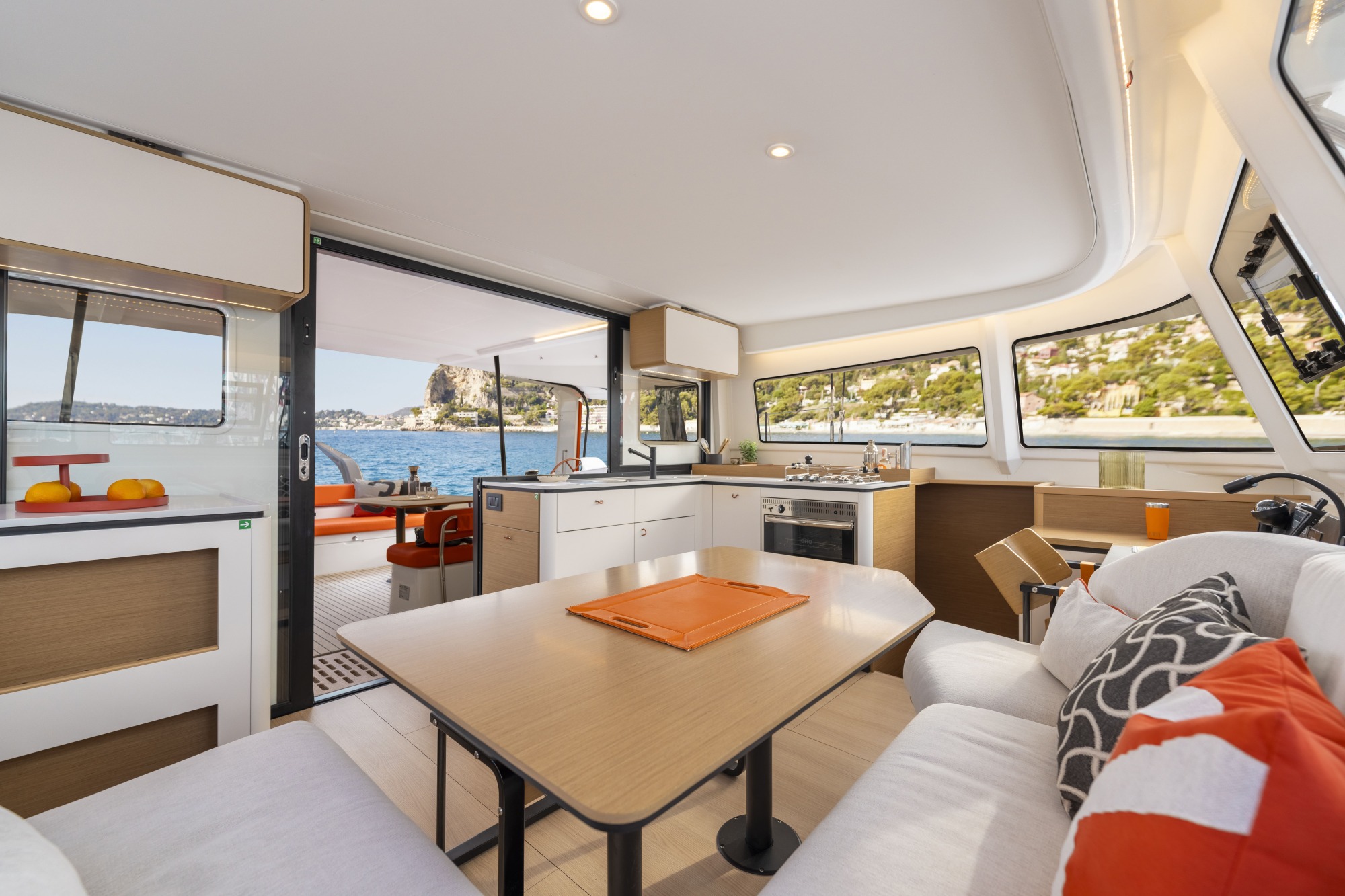
  • A band of large panoramic windows and low bulkheads give you almost 180–360° views from the saloon, so you’re not cut off from the outside world when you go below.
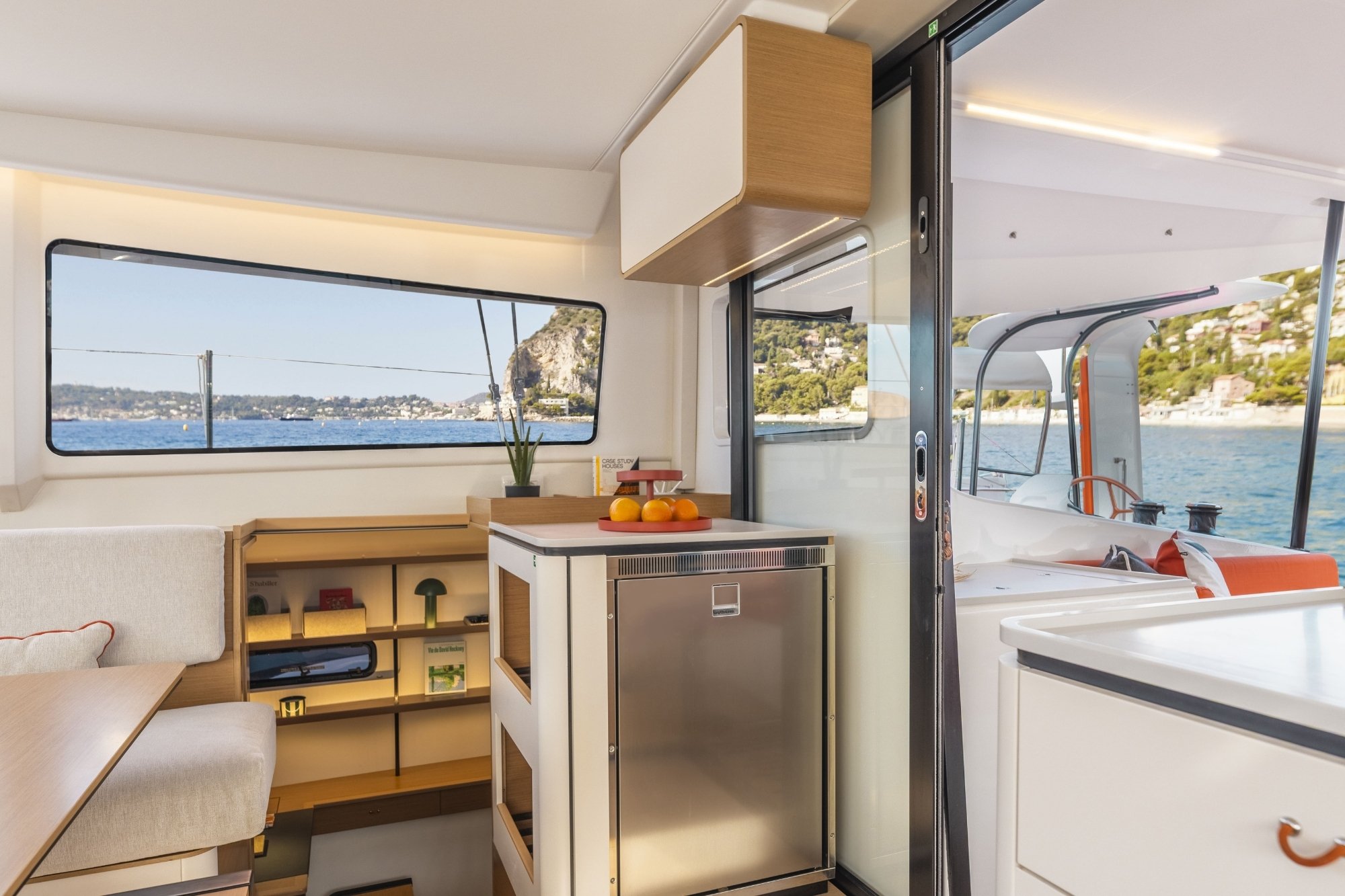
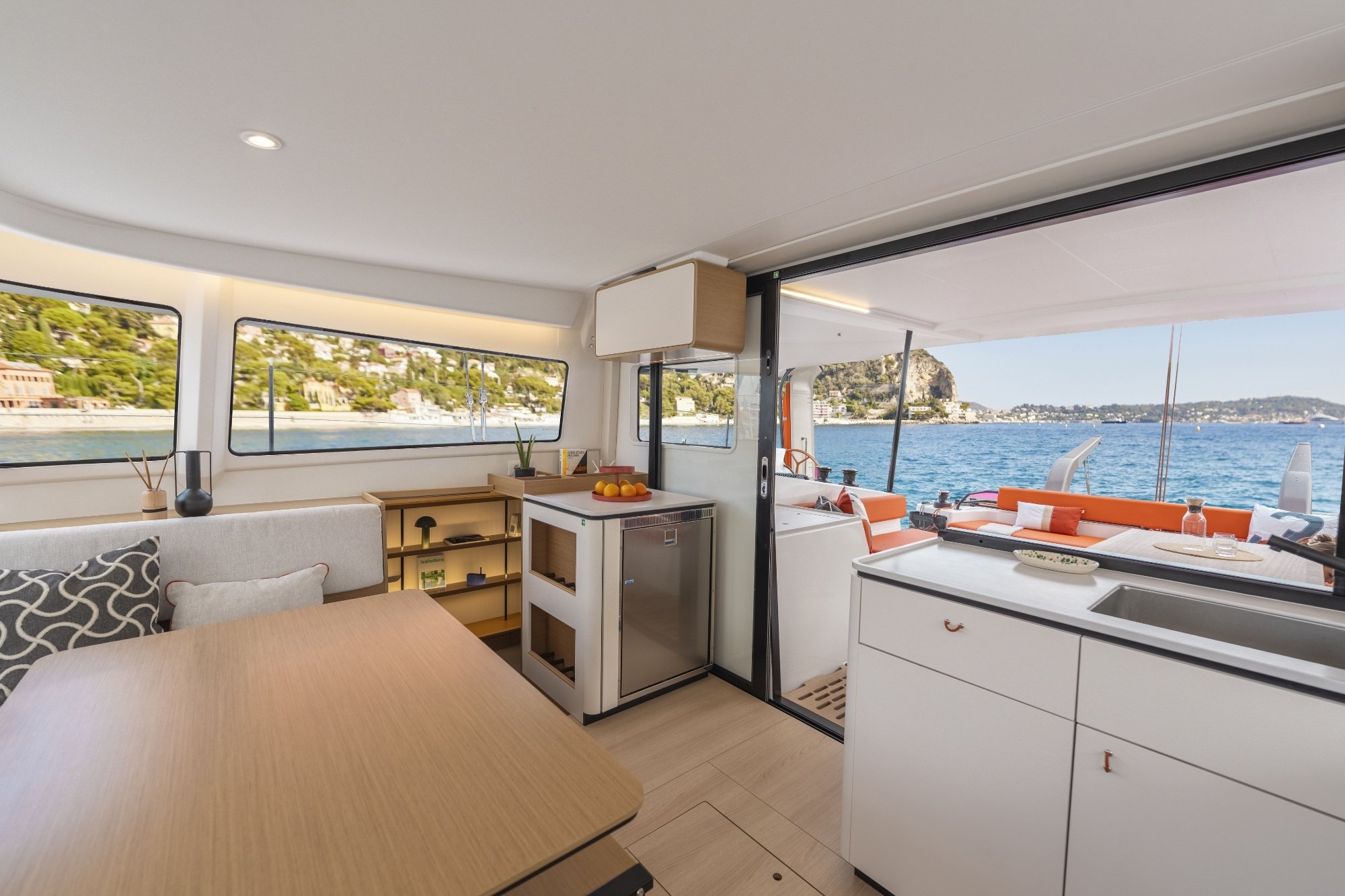
  • The galley is up, opening directly onto the cockpit via a large sliding door and window, so social life flows between inside and outside.
  • Headroom is generous throughout the bridgedeck; the whole feeling is more “beach loft” than “traditional cabin.”

For someone coming from a monohull, this is where you really notice the difference: you can be cooking, someone’s trimming, kids are drawing at the saloon table, someone else is reading in the cockpit – and everyone’s in the same visual and social space.

3-cabin & 4-cabin layout options

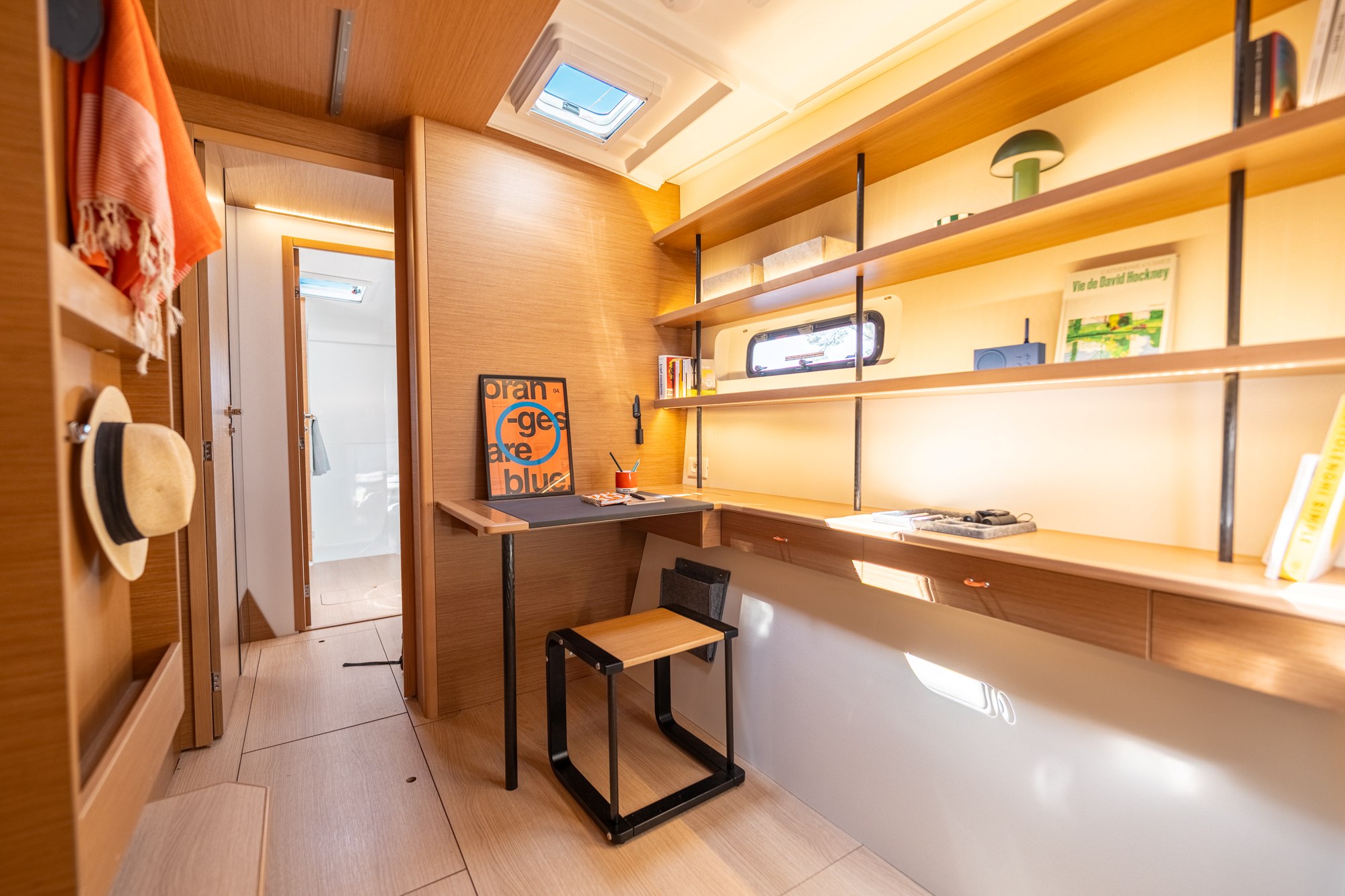
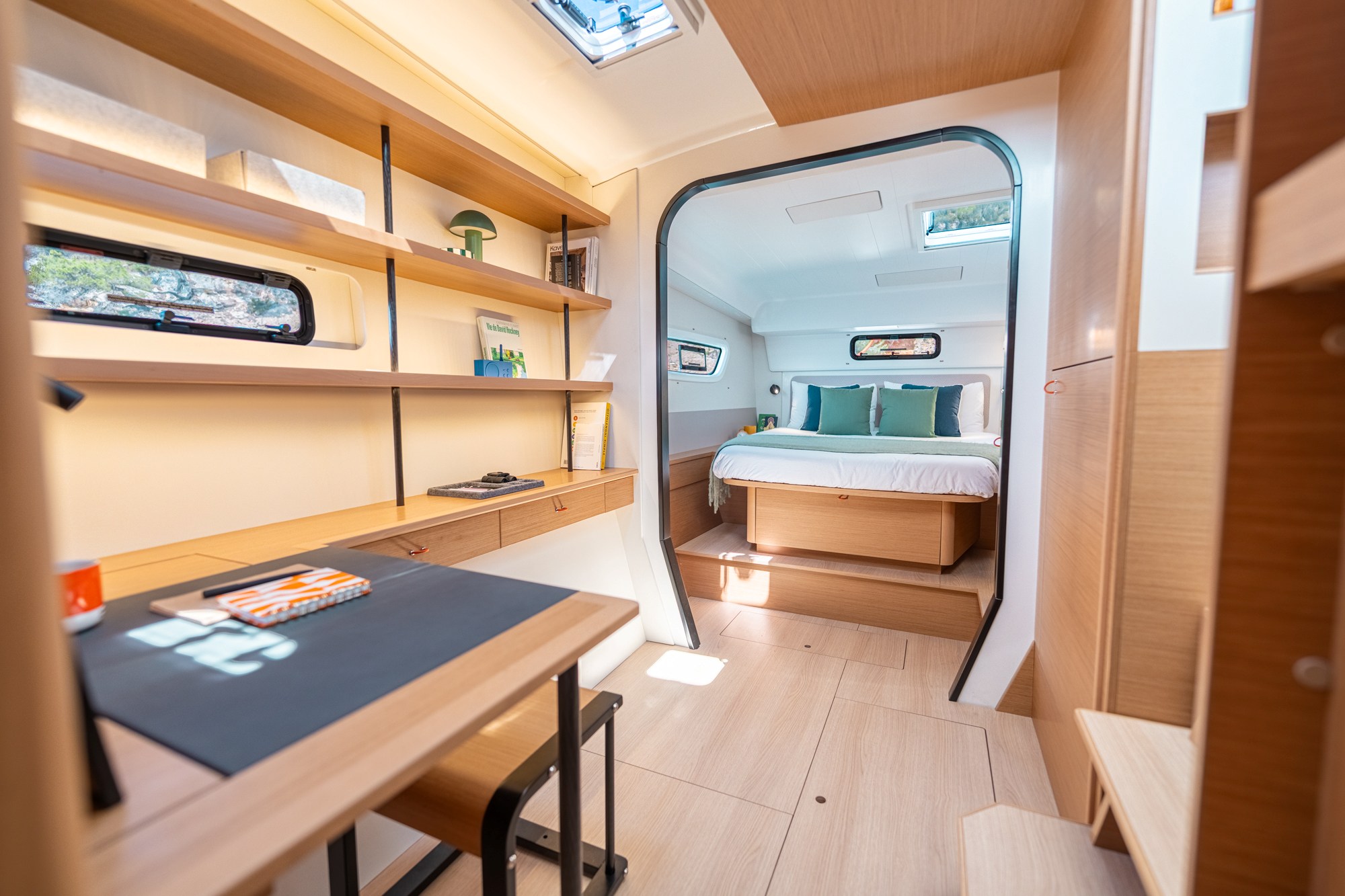
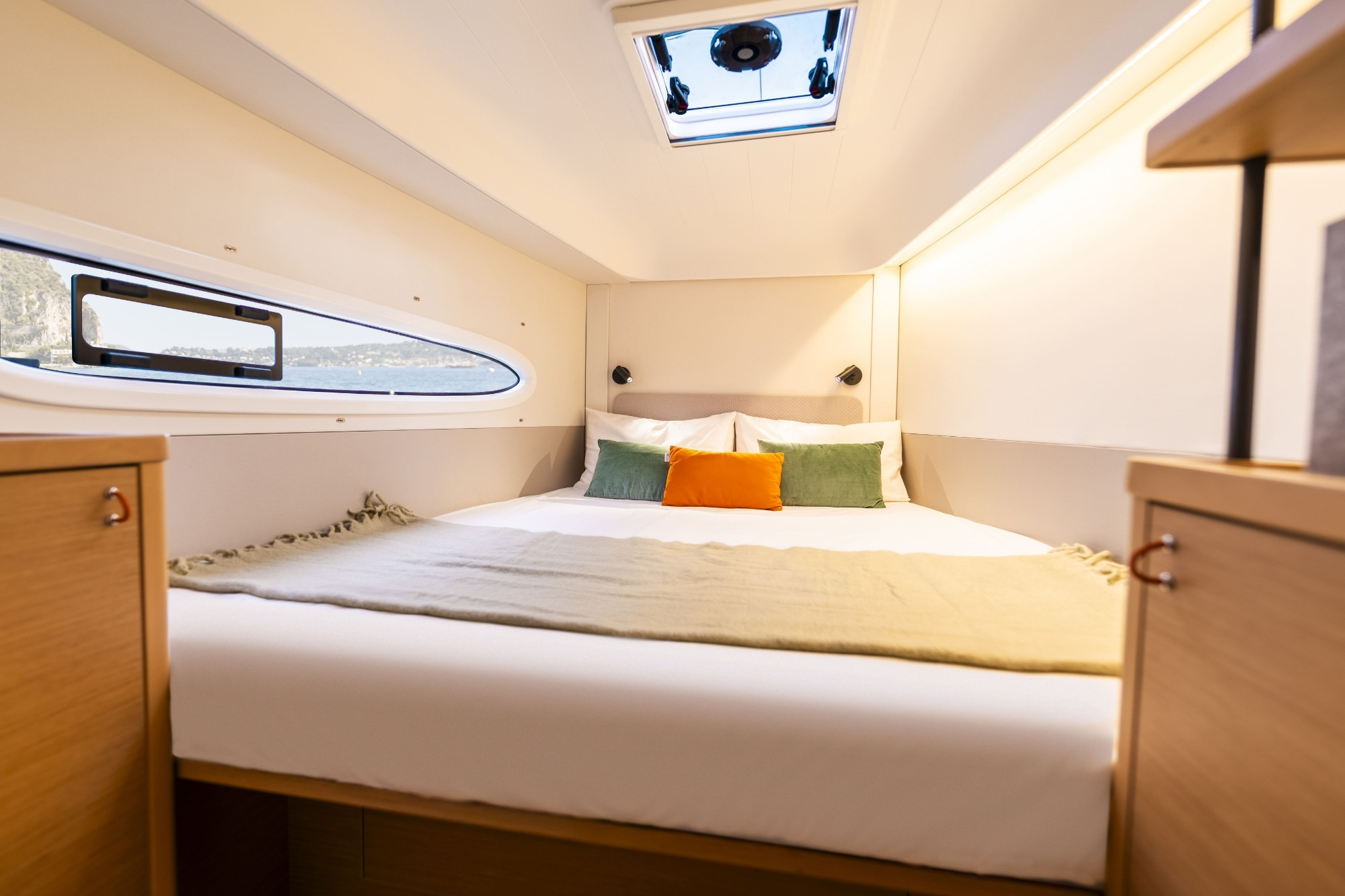
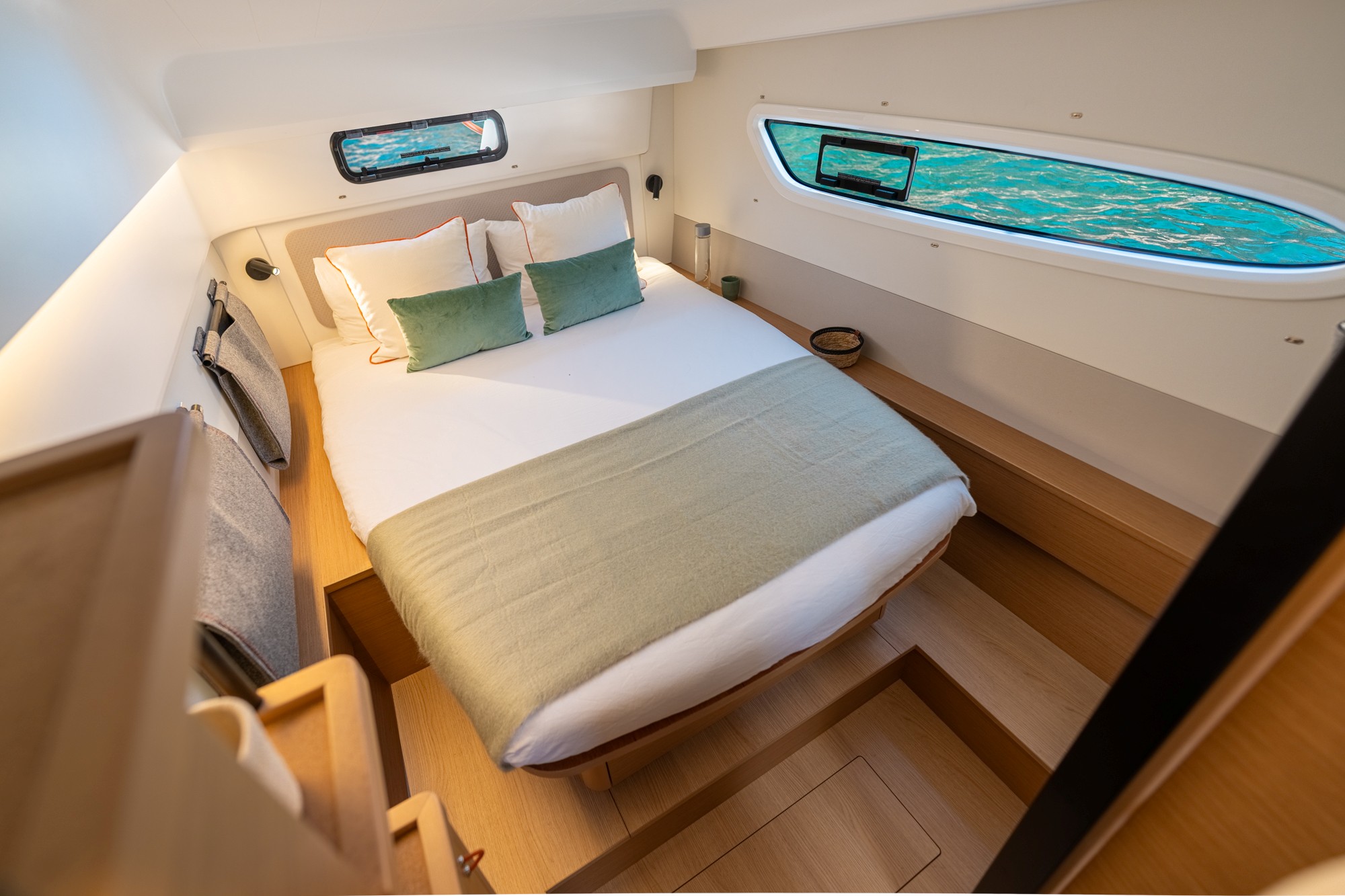
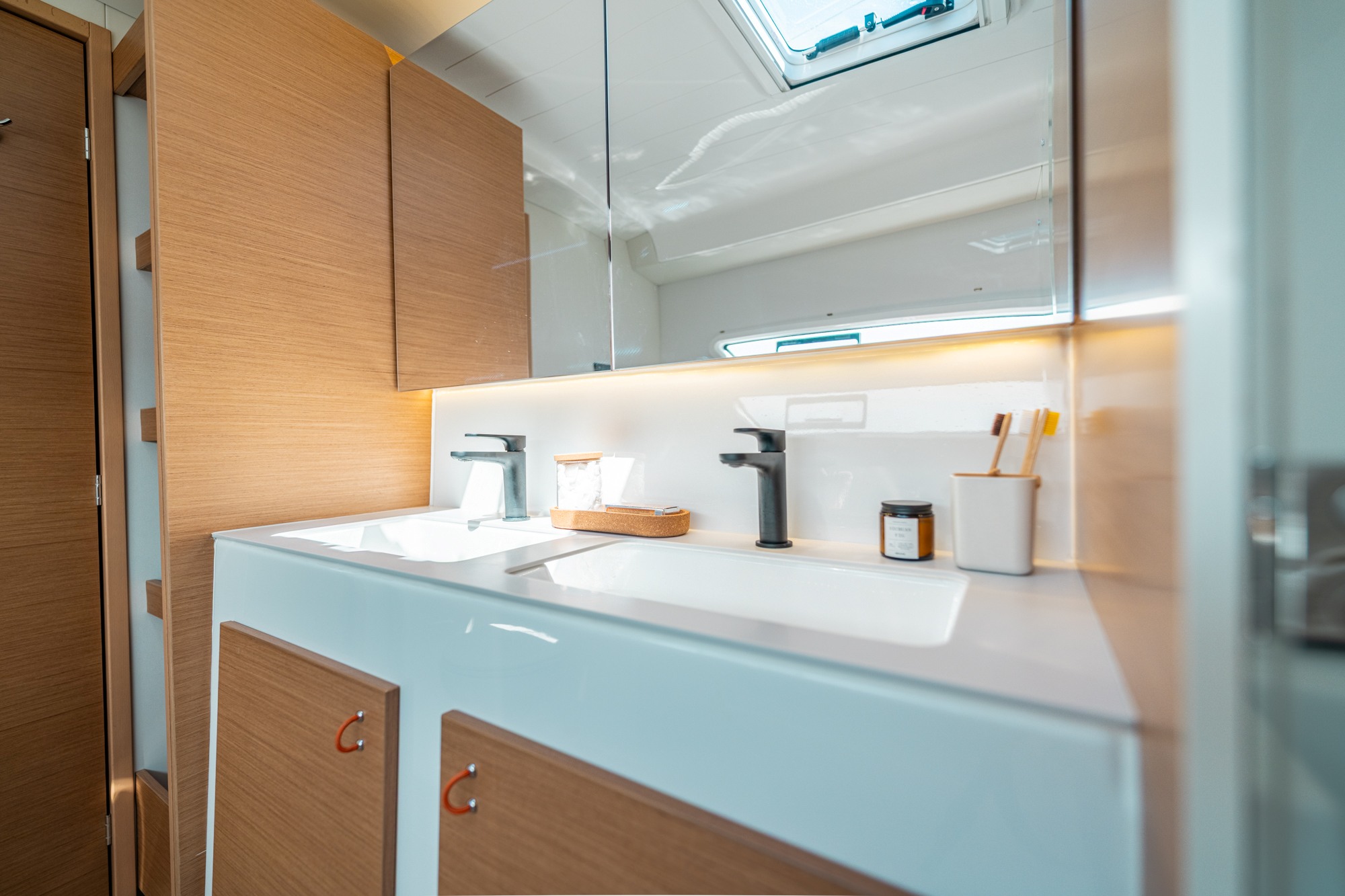
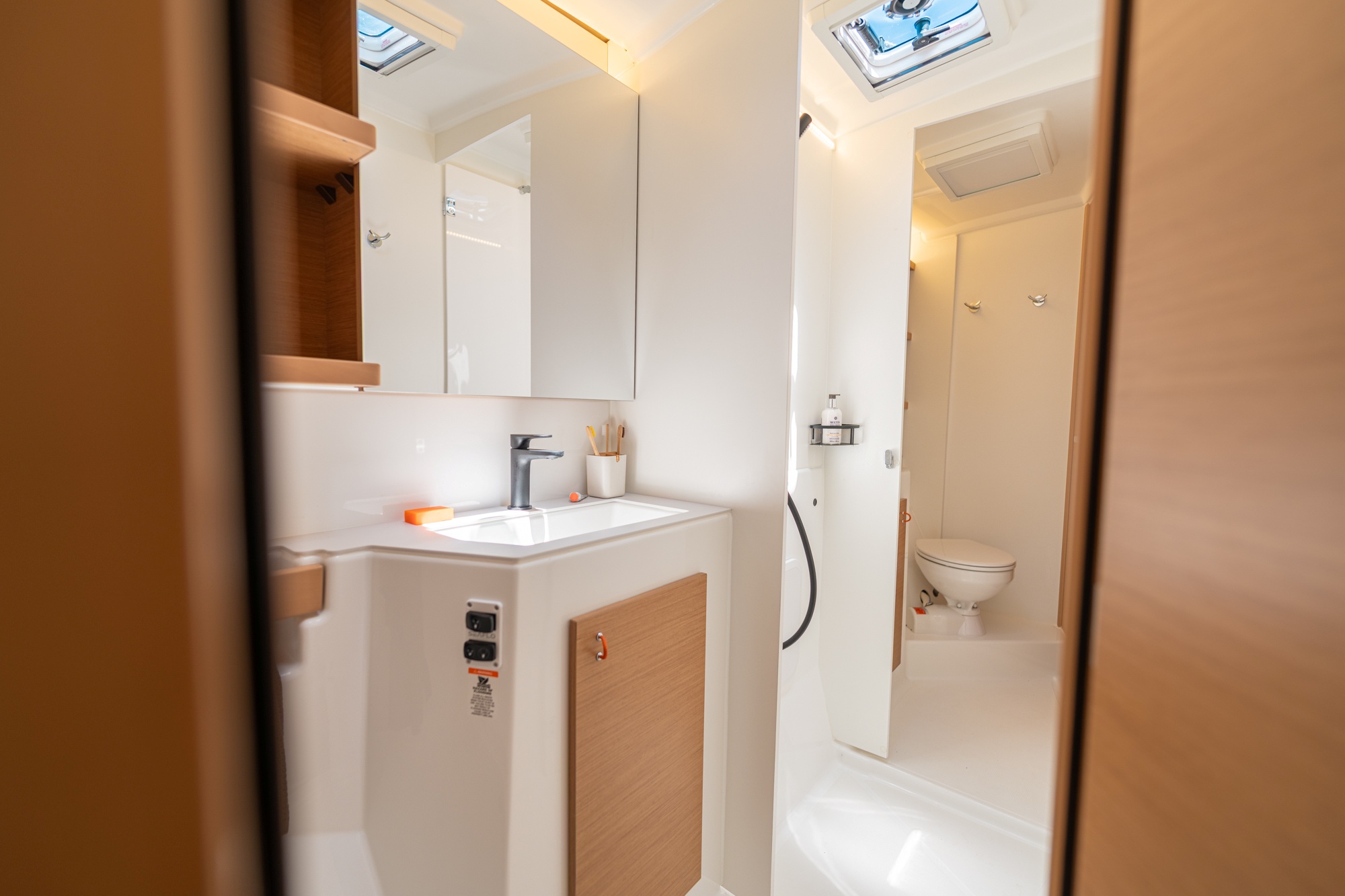
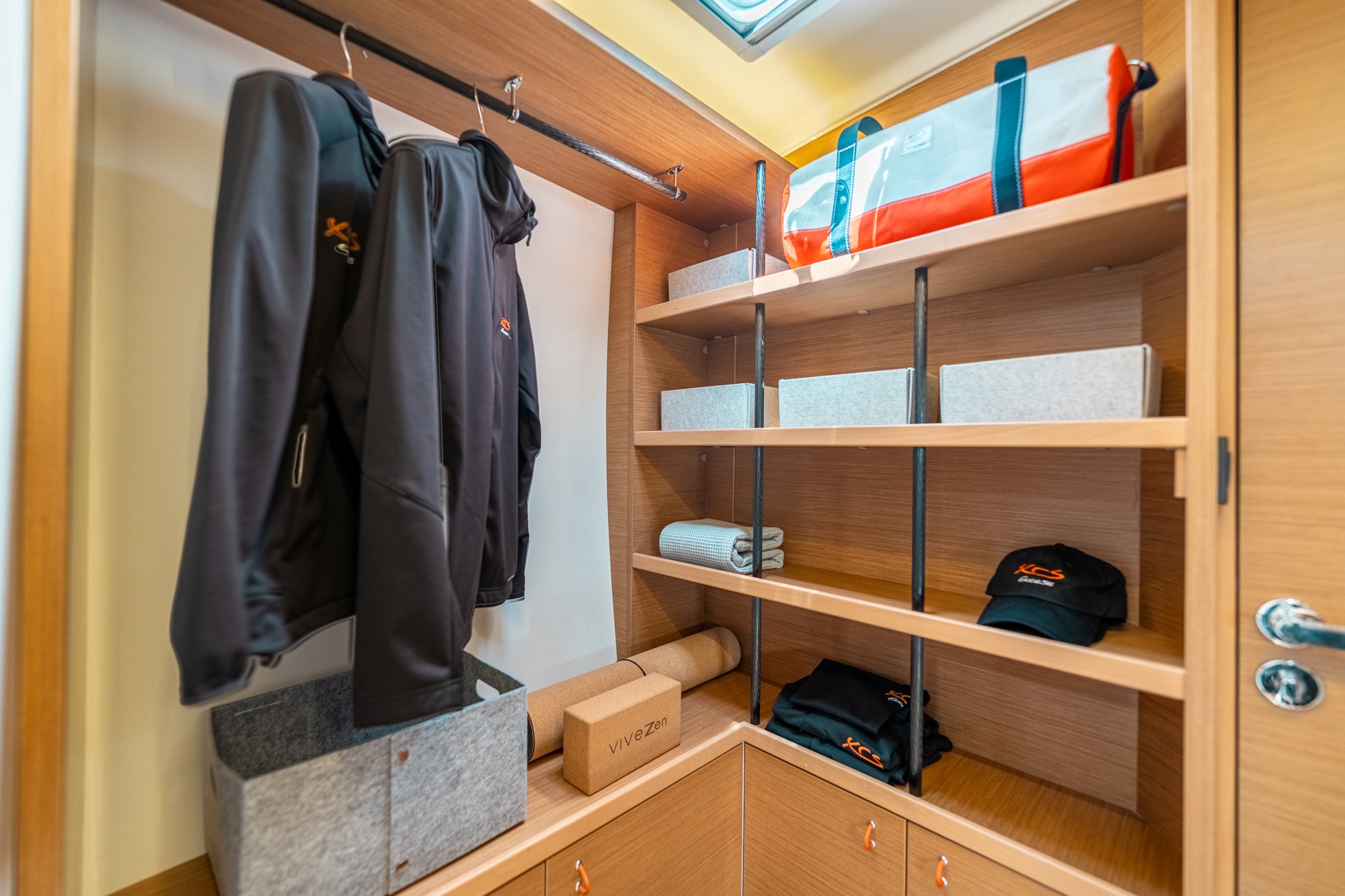
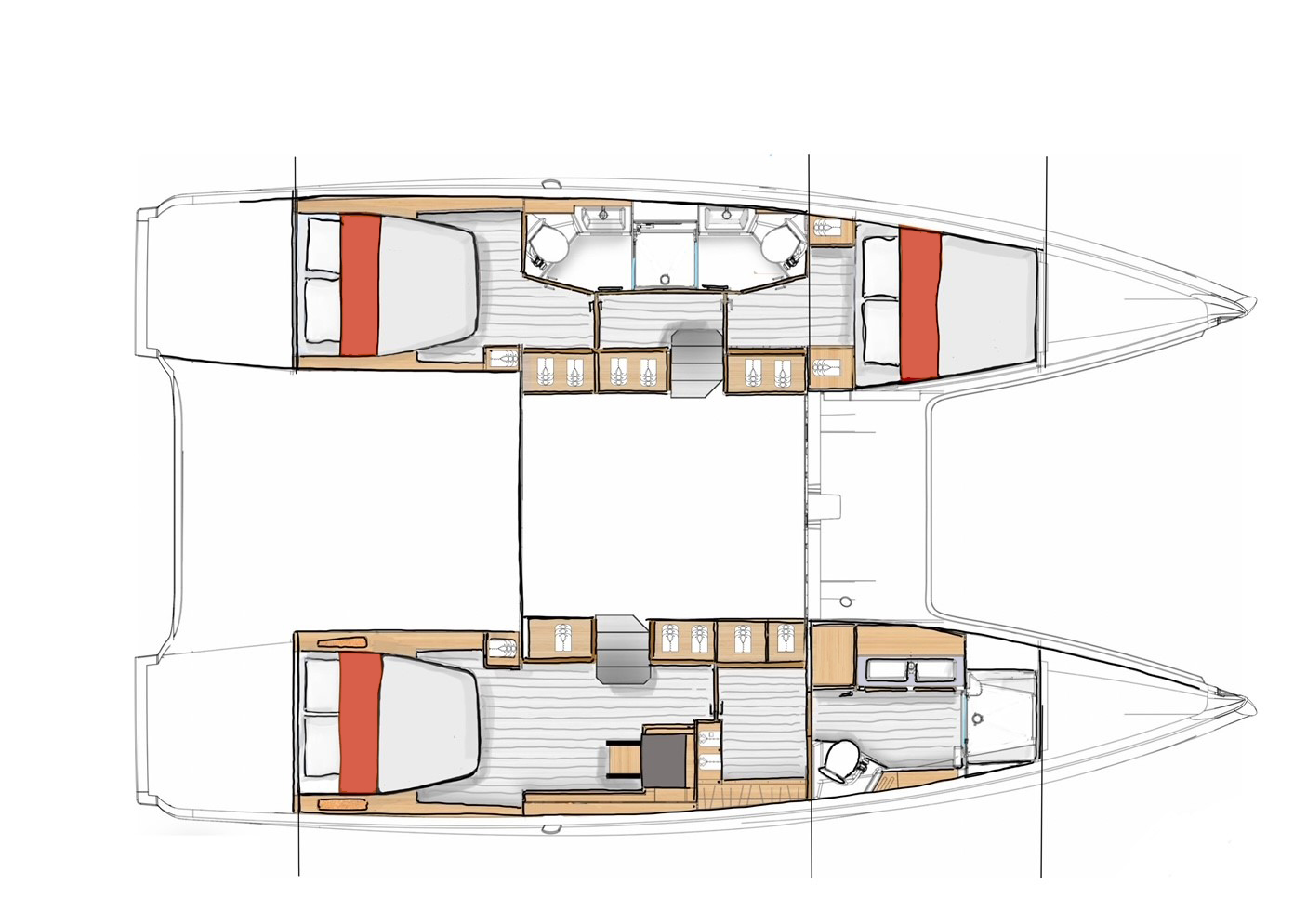
Excess offers the 13 with 3‑ or 4‑cabin configurations, for 6–12 berths depending on how charter‑or owner‑focused you want to go. The 3-cabin version features a private suite in the starboard hull with a large double berth, full-length closet for storage, a dedicated desk/work area with ocean view, and a large head with separate shower forward. There’s even a proper dressing room/closet – rare on a 43‑footer – which makes long‑term liveaboard life much easier.

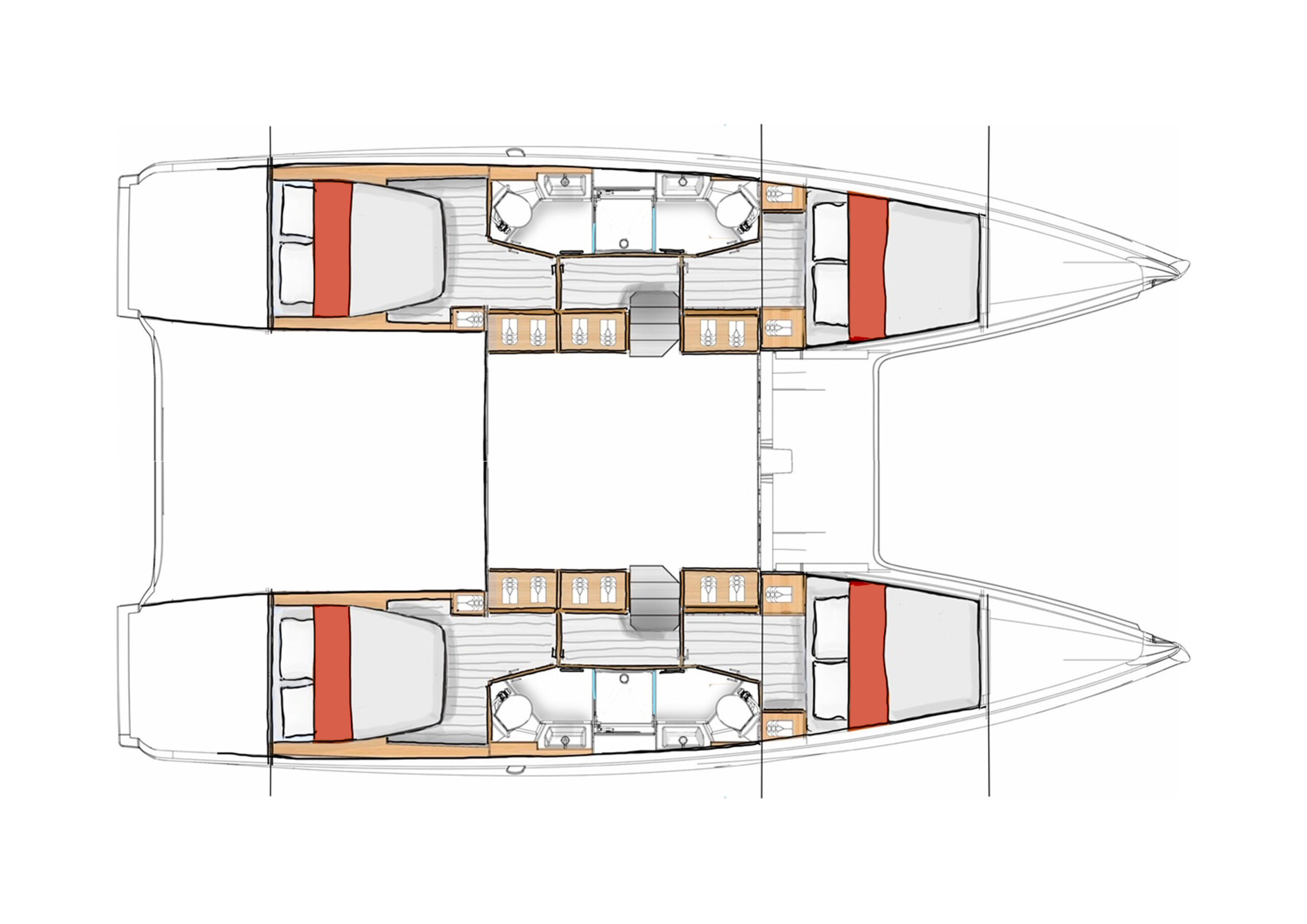
With the 4-cabin layout version of the Excess 13, there are mirrored cabins in each hull each with en-suite head, making this setup ideal for family cruising or even a charter operation. In both layouts, the narrative is the same: a lot of volume, but kept visually light with big windows and careful use of materials. Designers deliberately worked to create a sense of “perceived lightness” – not just in weight, but in how open the boat feels.

4.) Fuel efficiency & Independence

If you are planning on doing some serious cruising and want a fuel efficient boat, it’s hard to beat a sailing catamaran. Because the Excess 13 is relatively light with a decent sail area, she’s designed to keep sailing in conditions where heavier catamarans really struggle. Every extra hour you’re sailing at 6–8 knots instead of running engines at 2,000 rpm is free range and less time at the fuel dock.

Standard power is twin 40 hp diesels with 2 × 52.8 gallon fuel tanks for about a 106 gallon capacity. That’s a relatively modest engine package for a 43‑foot cat, which only works because:

  • The hulls are fine and low‑drag, so you don’t need brute-force power to push them at typical cruising speeds.
  • You’re not carrying flybridge bulk and heavy joinery up high.

The result is the potential for decent motoring speeds with reasonable consumption, and – more importantly – the ability to cut engine hours in the first place thanks to the sailing performance.

There are systems onboard as well that reduce use on resources. For the boater that strives to reduce their environmental footprint as much as possible, the Excess 13 has some intriguing features. The “less is more” idea isn’t just about weight; it’s also about how much water and power you need to live comfortably:

  • Rainwater collection system integrated into the coachroof, feeding a dedicated tank (around 79 gallons). That’s a big deal if you plan to cruise remote areas or just prefer fewer marina visits.
  • Natural ventilation designed in – lots of opening hatches and careful airflow – so you rely less on energy‑hungry air‑conditioning at anchor.
  • Multi‑purpose interior elements (like cabin doors that double as closet doors) and optimized structure trim back unnecessary material and weight, without cutting functionality.
  • Option for a Solar‑optimised bimini and, from 2026, a hybrid drive with hydrogeneration, to harvest power under sail and cut diesel burn even more.

All of this adds up to a boat that doesn’t just rely on big fuel tanks and a massive generator to feel “comfortable.” Instead, it’s trying to make you more self‑sufficient by needing less.

Many catamarans that promise big living space end up feeling like apartments that occasionally move. The Excess 13 is intentionally pitched at sailing enthusiasts who want to live well aboard and still enjoy trimming sails and feeling the hulls accelerate. The team here at Crusader Yacht Sales has unique expertise on the Excess Catamaran line, as well as sailing in general. Our team is comprised of sailors and can assist you in making the right decision for your needs and budget. We look forward to showing you our Excess Catamaran inventory, assisting you with custom ordering your own, or helping you into one of our brokerage vessels.

SPECIFICATIONS

Basic Boat Info

  • Make Excess
  • Model 13
  • Year 2024
  • Condition new
  • Category sail
  • Builder Excess
  • Construction fiberglass

Dimensions

  • Overall Length 12,99 m / 42'7''
  • Beam 7,25 m / 23'9''
  • Draft 1,48 m / 4'10''
  • Cabins Count 3 to 4

Engines

  • Make Make
  • Drive Type Drive Type
  • Engine Power Engine Power
  • Year Year
  • Total Engine Power Total Engine Power
  • Model Model
  • Fuel Fuel
  • Type Type
  • Engines Engines

Tanks

  • Fuel Tanks 2
  • Fuel Tank Capacity 2 x 200L / 2 x 53 US Gal
  • Water Tank Capacity 300 L / 79 US Gal
  • Holding Tanks 2
  • Holding Tank Capacity 80 L / 2 x 21 US Gal

Other

ADDITIONAL INFO

To begin any discussion of the Excess 13, one must recognize how the Excess team, led by production manager Herve Piveteau, collaborated with hull and interior yacht designers to meet with knowledgeable customers, dealers, and company employees to get everyone’s collective input. This informed feedback was crucial to the design of the new boat. In addition to natural improvements in the evolution of any production boat, such as minor layout and other changes to tweak performance or streamline production, the designers looked out of the box to improve the boat in other ways.

The Excess 13 has a brighter, more contemporary interior with increased natural light coming through more windows, increased storage around the boat, and a better ventilated interior to minimize the need to run generator-powered air conditioning. In their efforts to adjust construction to maintain strength while reducing weight wherever possible, they added a rainwater catchment system in the coach roof to augment water supplies of this cruising yacht.

And cruising is what the Excess 13 is all about: true world cruising potential with liveaboard comfort. It must have easy-to-use and reliable sailing and other systems that support the Excess philosophy of less-is-more, and a structural integrity that is strong and lightweight, and reflects the modern interiors and materials that today’s sailors want.

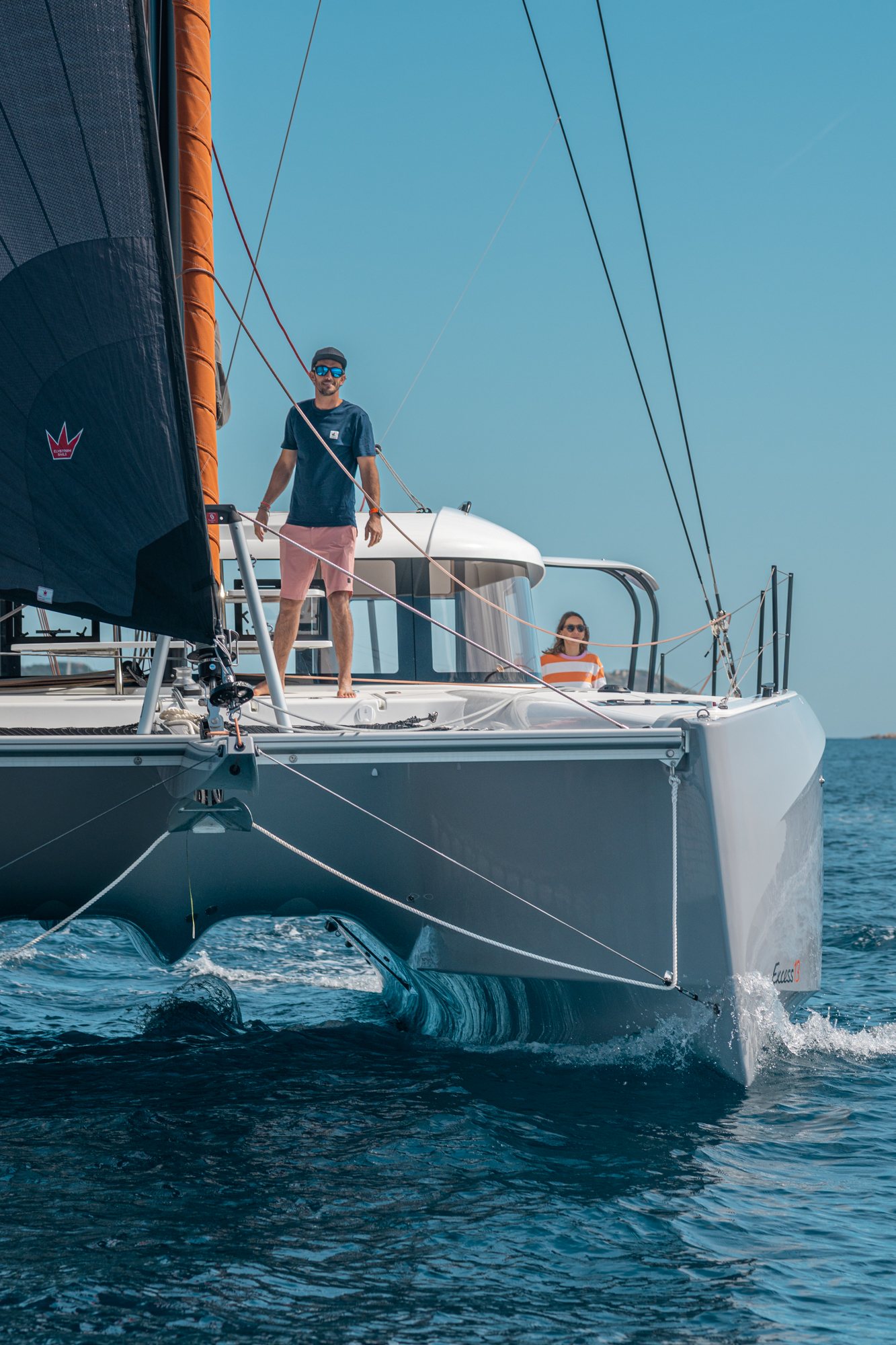
It all starts with the asymmetrical hulls first introduced in the larger Excess 14. The rounded bulges of the outboard surfaces of the hulls are what one expects to see in modern catamarans, while the inboard hull sides of each hull are flat. Additionally, the underwater sections of the hulls are kept as thin as possible. The results are significant to performance. The asymmetrical shape moves the center of buoyancy outboard, giving the catamaran a wider beam and increased righting moment. The flatter hull shape of the interior hulls reduces interference drag produced by the hulls sailing through the water. And the narrow hulls reduce drag at all speeds. Coupled with bows that easily lift out of the water, the catamaran is faster and more maneuverable.

The lines of the boat, including window spacing and shapes, and bridgedeck cabin design provide superior sightlines from the boat’s twin aft helms, one of the features that sets Excess catamarans apart from other cruising cats. The aft helm locations provide the overall sailing experience wanted by monohull sailors, with open visibility, wind in the face, and situational awareness that is not possible when the builder mounts the helm inside a protected cockpit against a house structure. (In terms of weather vulnerability and exposure, on any long offshore passages, the on-watch crew will run the boat on autopilot, staying in the protection of the cockpit.)

As on all Excess models, halyards, lines, winches, and electronics are within reach of the outboard helms, so one can enjoy all the benefits of performance sailing even by a short-handed couple.

Wide, uncluttered side decks on the Excess 13 aid this helm visibility, as do the large windows in the bridgedeck structure. The side decks also provide safe and easy movement around the boat under way or at anchor. As many sailors have come to realize, there is nothing quite as enjoyable as the multihull platform when one reaches a destination, and it is time to relax. Out come the water toys from dedicated storage and the crew takes advantage of the outstanding water access a well-designed catamaran provides.

The open transoms behind swing up helm seating incorporate fold-down swim platforms for effortless ability for everyone to get in and out of the water. And the centerline davit system ensures the utmost ease when handling the boat’s dinghy. It simply does not get better.

The Excess cockpit cleverly blends with the interior spaces. With the doors open, living spaces are on the same level, and the cat’s galley becomes part of both cockpit and saloon, making entertaining fluid and elegant. It is open air living at its best, with walk-around ease for guests and crew.

The Excess designers clearly listened to its owners. The skipper’s chart table on the Excess 13 faces forward and is a permanent location for navigation and other ship’s duties, rather than a temporary space for occasional use of chart book and laptop. Experienced cruisers know the importance of a proper chart table, particularly on a cruising boat with ocean-crossing potential.

Accommodations on the Excess 13 are also in line with its cruising focus. While a four-cabin interior will be available, the owner version is the preferred choice for a cruising couple. It has three staterooms, with the entire starboard hull dedicated to the privacy, convenience, and storage needs of the couple. In addition to a large aft island berth, the design includes a work desk for remote office use, and a separate dressing room complete with multiple hanging lockers and cabinets. There is an ensuite head forward, with a separate, walk-in shower near the bow. For owners enjoying their extended cruising adventure, luxurious living, privacy, and comfort are a top priority on the Excess 13.

Guest/family staterooms in the port hull are large and spaced out enough to avoid the confining interiors of other boats and ensure privacy. Each of the two cabins has its own ensuite head while they share a separate shower. And there are sufficient hanging lockers and drawers for everyone aboard to have their own space and storage.

There are still details to be finalized, but the Excess 13 will have a standard sailing rig (with upwind sail area of 1,237sq ft) as well as the optional Pulse Line package. (In the Excess 14, this package includes a taller mast, a square-topped main, and larger headsail.) The Code 0 is set on its own furler. Your broker will be happy to help work through the list of performance options and sailing gear to create a sailing package that best meets your needs.

The boat comes with a standard freshwater capacity of 79 gallons, with optional additional tankage. The rainwater catchment system is a great new feature, much appreciated by cruisers in paradise who want independence from outside water sources yet are reluctant to rely solely on the power requirements and complexity of reverse osmosis watermaker systems.

Engine power comes from two 40hp diesel engines with saildrives, which are a proven and modern propulsion solution. There are two 53-gallon fuel tanks.

The Excess 13 has an overall length of 42’7”, with a maximum length of 50 feet with the sprit for off-the-wind sailing. The beam of the cat is 23’9” and it has a maximum draft of 4’10”, which is attractive for those planning to sail and cruise in Chesapeake Bay, the Bahamas, and other anchorages in skinny water. Light ship displacement comes in around 23,350 lbs.

There are many reasons to consider the new Excess 13 as your top choice for a cruising boat, no matter what your sailing and cruising plans are now and for the immediate future. It will be an ideal cruising boat for three-season sailing in Chesapeake Bay and points north and south. It also has the offshore pedigree of a capable bluewater sailboat wherever your dreams may take you. Whether you intend cruising in the Bahamas and Caribbean or dream of island hopping across the South Pacific well over the horizon, it has the basic right stuff to go the distance in safety and comfort.

Anyone in the market for a serious cruising sailboat, whether a catamaran or monohull, should visit the knowledgeable professionals at Crusader Yachts in Annapolis. Experienced brokers are ready and willing to help you get aboard this new Excess yacht and explain the features that make the Excess 13 excel as a cruising boat. Crusader Yachts is proud of its history of making dreams come true and its staff will lead you through the process of ordering a new boat that will be perfect for you and your plans.

Excess Catamarans is part of Groupe Beneteau, the largest boat builder in the world. It has produced well over 6,000 catamarans over the past decades and its knowledge and engineering expertise guarantees a solid product with great value that will give years of enjoyable ownership whether cruising the Bay…or the world.

Contact Crusader Yachts to learn more about this exciting new cruising yacht from Excess Catamarans.

excess 13

CAN’T FIND WHAT YOU’RE LOOKING FOR?

Our team of yacht brokers has access to boats and yachts not currently on the market. Let us know what you’re looking for and we’ll see if we can find it!

CONTACT US