Guide To Boating In The Chesapeake Bay

Chesapeake Bay is the largest inland tidal body of water on the North Atlantic coastline. It takes fresh water from over 150 rivers and streams in six neighboring states (Maryland, Delaware, New York, Pennsylvania, Virginia, and West Virginia) and combines them with seawater from the Atlantic Ocean. This creates a unique and valuable natural resource, abundant with diverse marine life, plants, and aquatic wonders. It is a jewel loved by all who live on or near its shores and enjoy its many benefits.
The Bay is 200 miles long, from the Elk River in the north to the southern entrance from the Atlantic Ocean between Cape Charles and Cape Henry. In its entirety, it covers 4,500 square miles, with about 11,000 miles of shoreline.
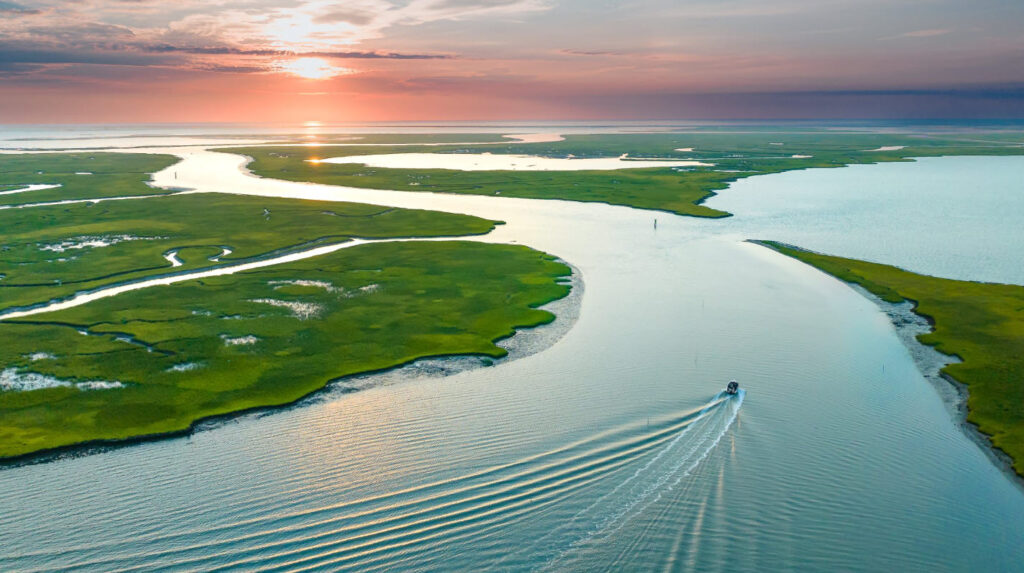
(Above image courtesy of VACHAMP1984/Pixabay)
WHATEVER FLOATS YOUR BOAT
No matter what your boating interests, there are activities perfect for you on Chesapeake Bay. With a hundred yacht and sailing clubs spread around the Bay, and numerous of fishing, paddle, and canoe clubs, there is almost limitless potential camaraderie and adventure on its waters. It is easy to find others who share your enthusiasm, which is also a terrific way to learn and develop watersports skills and experience.
For those interested in fishing, the opportunities correspond to the time of year, as seasonal factors dictate water temperature, fish type, and migration patterns. And no matter when during the year one choses to take out fishing gear, the golden hours are always best, early in the morning or late in the day.
In the spring and fall, anglers go after striped bass with peak times in May and October. Summertime and warmer water temperatures celebrate flounder and trout season. Winter months are best reserved for yellow perch and pickerel.
General boating folks have it easy on Chesapeake Bay, as there are no such seasonal windows to worry about. About any comfortable day is good enough, year ‘round. And there are no shortages of places to go or things to do on a boating day. It might be just enough to be away from the dock, whether looking at foliage, surrounding waterfront homes, or see the natural settings captured in the right light. Or towing the kids and grandkids around in inflatable toys.
On a nice day, you’ll see swarms of versatile center consoles running at full speed in all directions. Kayaks and SUPs need to avoid the wakes from all this traffic, and the buzz coming into harbors in season can be exciting enough to keep everyone on their toes. Young people who grow up on the Bay all have fabulous memories of great times with family and friends. Picking apart crabs at dockside eateries become as natural as hot dogs on the home barbecue, and even more fun, as is cooling off by leaping off the boat or dock during a sweltering summer day.
Dedicated cruisers find Chesapeake Bay has more than enough interesting places to last several lifetimes. One can visit Baltimore’s downtown Inner Harbor, go into total immersion mode among the tourist crowds in popular waterfront towns, or gunkhole alone up a narrow creek or river only a short distance from home.

(Copyright: Credit: Efrain Padro / Alamy Stock Photo)
One can also go to anchorages that draw crowds every weekend, such as Dobbins Island and Shaw Bay, or fight traffic to visit popular Annapolis, St Michaels, Rock Hall, and Cambridge. Visiting cruisers often spend several days exploring, shopping, and eating local fare. Seafood, you bet! It defies many non-boaters how easy we drop a Benjamin to cover fuel and dockage to buy ice cream for the family.
Cruising boats can be as varied as one’s imagination, from small Boston Whaler-like skiffs, speedy runabouts, cabin cruisers, to vintage or modern trawlers and downeast cruisers of every shape and size.
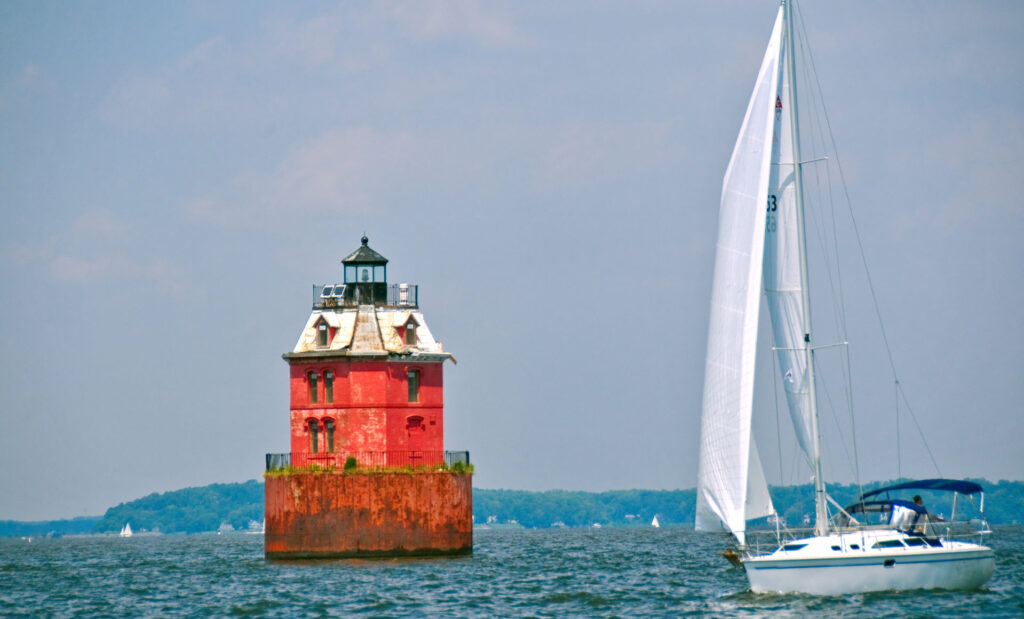
Sailors have an ideal playground on Chesapeake Bay. The summers are hot, humid, with windless periods, but they don’t compare to the spring and fall months which are perfect for sailors at any level. Day sailing, regatta or one-design racing, overnight cruises, as well as week-long adventures on the Bay are all exciting and well within the capabilities of most sailors.
Sailing schools dot the Bay in populated areas, and charter companies often offer instruction for those wanting to learn the ropes. One can even hire a professional captain to stay aboard if desired. A three-day sailing charter guarantees great memories.
The size and style of sailboat for Chesapeake sailing is less relevant than one might expect, and an experienced broker will help sort through the process and choices to fit the budget and desired level of involvement. While the most popular sailboats in recent years have been catamarans, particularly for charters, all kinds of sailboats work great for Bay sailors.
The thrill of finding the groove under a stiff breeze on a sunny day with a delightful crew is one of life’s pleasures. The motion and sound of the hull slicing through waves inspires, while the relaxed laughter in the cockpit tempers the groans of the running rigging straining against the pull of the sails. It is a beautiful feeling.
Those of us lucky to live close to Chesapeake Bay seldom feel required to look over the horizon for adventure. Yes, one can easily slip out of the Bay and head up to New England, but it is not for lack of new adventure and opportunity right here. We already enjoy a mix of quiet anchorages and busy destinations with lots of things to see and do, without a need for distant voyaging. I sailed to Bermuda multiple times over the years, yet I don’t consider it was ever “better” than what I can experience right here on Chesapeake Bay. In fact, I have sailed and cruised around the world on most oceans and seas, yet the waters of Chesapeake Bay remain dear.
SOME THINGS TO CONSIDER
As I have said, Chesapeake Bay is very boating and cruiser friendly. The waters have tidal ranges of less than two feet, and the two-knot current is hardly critical for most navigation.
One aspect of Chesapeake Bay of particular interest to boaters is that it is generally shallow outside of the major ship channels. For this reason, most dealers and brokers suggest a shoal draft when shopping for a sailboat. Reduced draft really extends one’s ability to go up interesting creeks and hidden waters around the next bend.
To offset the shallow water, the bottom is a mix of mud and sand, so any inevitable grounding is no big deal. Everyone runs aground at some point boating in Chesapeake Bay. Backing off into deeper water is a good skill to know anyway.
Despite what the hardcore sailing books say about anchoring gear and outfitting for global voyaging, an anchor rode of all chain is just so much unnecessary weight for Bay boating. It is best to keep weight out of the ends of a sailboat, and a nylon rode with a short length of chain is more than adequate. Again, a knowledgeable broker will be a good guide for such details.
You also do not need to outfit a boat with every bit of electronics and equipment. Radar is seldom needed on the Bay. I doubt most boaters will use AIS, although I find it helpful for situational awareness. I am a fan of multiple VHF radios, and having a handheld in addition to a fixed mounted radio works well.
Navigation is straightforward, even using a tablet. Shorelines are always visible when confirming one’s progress when looking at a chartplotter. Commercial ships have pilots aboard and stay in the channels. A pleasure boater has no need to linger in these traffic zones and can safely go about their business out of harm’s way.
It is never necessary to travel long distance to find a wonderful place to drop the anchor. Given the immense variety and diversity of the Chesapeake, I can be happy spending a weekend only a few miles outside of my home in Annapolis, which also happens to be the sailing capital of the U.S. And I can always go for the energy and increased activity of Baltimore, St Michaels, and many other destinations where my crew can explore at their leisure. Even Washington DC is just a trip up the Potomac.
Which brings up an important point. With all there is to do and see in many of these historic towns, I recommend getting a copy of a Chesapeake Bay cruising guide, such as those published by Waterway Guide and Chesapeake Bay Magazine. They will explain what there is to do and see at each port, along with pertinent navigation information, contact info about municipal anchorages and marinas, as well as listing the must-see sights, places to eat, and historical highlights.
One can also use the guide to record one’s travels, adding notes to document the impressions and other details for later review and perhaps a planned return visit when guests are in town.
Spending three days in Onancock on Virginia’s Eastern Shore will recharge the soul. But it is not unique by any means. It is but one of hundreds of experiences that prove boating in Chesapeake Bay is a great counterbalance to the daily demands and distractions of life back in the world.
Crusader Yachts is your headquarters for boats for sale in Annapolis and the Chesapeake Bay area. We are new boat dealers for Excess Catamarans, Jeanneau Sailboats, and Tartan Yachts, as well as offer professional yacht brokerage services. Come see us at our office located at 7350 Edgewood Road in Annapolis or give us a call at (410) 269-0939 for more information about boating in the Chesapeake Bay area!
Other Articles Of Interest:
